Hiring in Pakistan is evolving with remote work and job opportunities across banking, healthcare, logistics, and technology. Larger job markets mean more applicants applying for roles. With more applicants than ever, employers face a common challenge: fake degrees and false employment claims are common. A background check is the only way to verify that a candidate is who they claim to be and has the qualifications they list. While background checks are not mandatory by law, they are now standard practice for companies in banking, healthcare, logistics, and technology. Most hiring managers assume a resume and reference call are enough. They often miss fraud that a proper background check would catch.
In this guide, you will learn:
- What background checks are and why they matter for hiring decisions
- The types of background checks that are legal in Pakistan
- How to conduct a background check step-by-step
- Common mistakes to avoid when screening candidates
- How to stay compliant with PECA data privacy laws
This guide will help you make better hiring decisions and protect your company from hiring risks.
Background Check Requirements in Pakistan
Pre-employment screening in Pakistan requires strict compliance with federal data security laws and provincial regulations. To conduct background checks, employers must fulfill these requirements:
- Candidate Consent: Under PECA 2016, employers must obtain documented, written consent before accessing a candidate’s personal, financial, or criminal records to ensure legal transparency and data protection.
- NADRA Identity Verification: Employers must check the candidate’s CNIC directly through the NADRA database. This digital or biometric lookup confirms the candidate’s identity, prevents fraud, and tracks permanent address details.
- Criminal Clearance: As Pakistan has no single public criminal database, candidates must provide a Police Character Certificate from their local police station (such as the Police Khidmat Markaz) to check for any active FIRs.
- Academic Verification: To prevent credential fraud, all university degrees must be officially confirmed and stamped by the HEC. School and college certificates require verification from the local educational board (BISE).
- Employment Verification: Candidates must submit an official service certificate or a resignation acceptance letter from previous employers. These documents confirm employment dates, job titles, and departure details from the previous organization.
- Credit & Financial History: For roles involving financial management, companies assess credit history and financial standing. This process involves candidates providing bank clearance letters to verify financial background.
- Medical Screening & Drug Testing: Pre-employment health assessments are standard in healthcare, manufacturing, and security sectors. Employers ensure tests remain strictly relevant to the job role and follow provincial anti-discrimination laws.
- Salary Slips or Bank Statement: To confirm the candidate’s actual job level and value, request the last three months of salary slips or a bank statement showing salary credits. This is the surest method to verify their previous compensation.
- Professional Council Registrations: For specialized roles, a university degree is insufficient. You must request valid, active registration cards from the relevant regulatory bodies. This includes PMDC (for doctors), PEC (for engineers), and ICAP (for accountants). These documents prove the candidate is licensed to practice and has not been blacklisted for professional malpractice.
Types of Background Checks in Pakistan
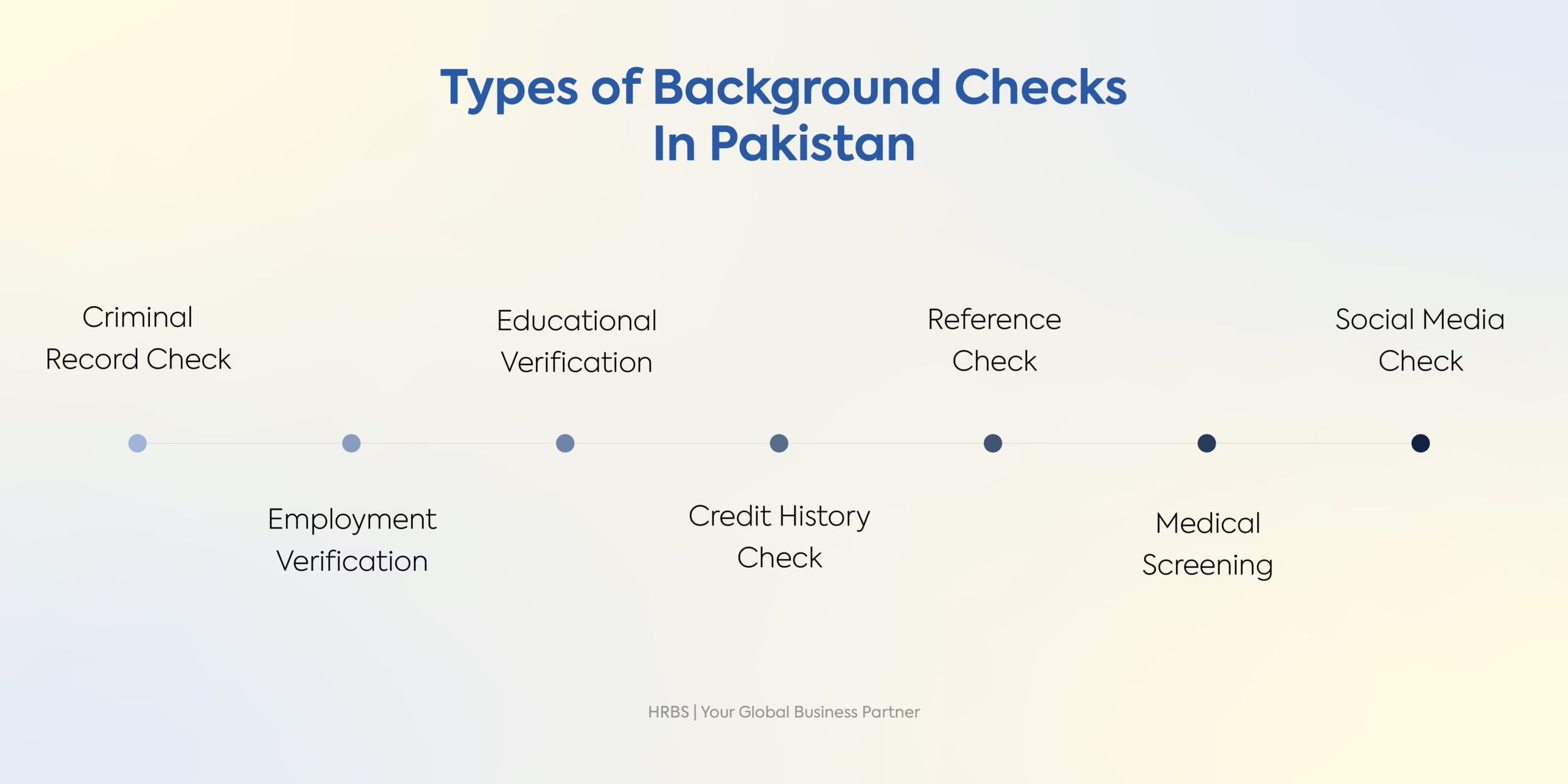
In Pakistan, employment screening covers essential areas that help employers effectively evaluate a candidate’s background and suitability. Knowing the different types of background checks allows organizations to design tailored screening processes that match the job role requirements and maintain compliance with local regulations. Key types of background checks include:
Criminal Record Check
This check reveals if a candidate has a history of illegal activity, from past convictions to pending court cases. It is the primary way to ensure you are not bringing safety risks into your workplace.
- What it checks: FIRs, police complaints, and court records via the Criminal Record Management System (CRMS).
- How it works: Digital verification through the Police Khidmat Markaz (in Punjab/Sindh) or manual clearance from local police stations.
- Turnaround: 1–3 days for digital checks; 5–7 days for manual letters.
- Best for: Security guards, drivers, cashiers, and government staff.
Employment History Verification
Verifying a candidate’s past work history is the most effective way to detect fake experience letters and inflated job titles. It ensures that every claim on the resume is backed by actual tenure and performance.
- What it Checks: Job titles, exact joining and leaving dates, salary brackets, and reasons for resignation.
- Local Insight: Request bank statements for salary credits to instantly expose fake experience letters, as fake documents cannot show consistent monthly transfers.
- Turnaround: Typically 3–5 business days.
- Best For: Mid-to-senior managers, technical experts, and positions requiring specialized industry skills.
Education Verification
Verifying academic credentials is the only way to filter out fake degrees and unaccredited diplomas. This process confirms that qualifications are real and recognized by accredited institutions.
- What it Checks: Degree authenticity, passing year, and accreditation status.
- How it Works: Verify university degrees through HEC and school certificates via IBCC or local BISE Boards. For technical diplomas, cross-check directly with the specific training institute.
- Turnaround: Typically 7–15 business days.
- Best For: Doctors, engineers, lawyers, and skilled professionals.
Identity Verification
Confirming identity is the most basic step in the hiring process. It proves that the person stands before you is who they claim to be and prevents “ghost employees” from entering your payroll.
- What it Checks: CNIC validity, permanent address, date of birth, and family details.
- How it Works: Validate the candidate’s details directly against the NADRA database using the Verisys system. This confirms that the CNIC number belongs to the candidate and is currently active.
- Turnaround: Instant to 1 business day.
- Best For: Every single employee, freelancer, and contractor.
Reference Checks
Contacting previous supervisors provides insights that a resume cannot show. This step evaluates a candidate’s work ethic and professional behavior through direct conversation.
- How it Works: Conduct structured phone interviews with past reporting managers. Always verify the reference’s own professional profile (e.g., on LinkedIn) to confirm they actually held a supervisory role. This prevents candidates from listing friends or junior colleagues as “managers” to secure a positive review.
- Turnaround: Typically 2–4 business days.
- Best For: Senior management, team leaders, and client-facing roles.
Financial History Review
Screening financial records helps you assess a candidate’s level of financial responsibility and integrity. This check is critical for preventing fraud, especially when hiring for positions that involve handling cash, budgets, or sensitive company assets.
- What it Checks: Credit worthiness, loan default history, bankruptcy status, and any reported financial misconduct.
- How it Works: Request a Consumer Credit Report (CCR) or check the Electronic Credit Information Bureau (eCIB) data through authorized channels. This reveals if a candidate has a history of defaulting on bank loans or serious financial mismanagement.
- Turnaround: Typically 3–5 business days.
- Best For: Accountants, Chief Financial Officers (CFOs), cashiers, and bank employees.
Social Media Screening
Checking a candidate’s public online presence helps you see the real person behind the resume. This step protects your company’s reputation by spotting behavior that could hurt your brand image.
- What it Checks: Public professional conduct, hate speech, conflicting business interests, and undisclosed side businesses.
- How it Works: Always obtain written consent to remain compliant with privacy standards. Look for conflicting commitments, such as a candidate actively promoting their own private agency while applying for a full-time role with you.
- Turnaround: Typically 1–2 business days.
- Best For: Marketing leads, senior executives, and anyone representing your brand publicly.
How to Conduct Employee Background Checks in Pakistan?
Running a background check in Pakistan is a necessary process for employers who want to hire with confidence and comply with local laws. Here’s a clear, step-by-step approach to conducting background checks that ensures fairness, transparency, and legal compliance while offering unique value to both employers and candidates.
Obtain Candidate Consent
Never skip this step. Before starting any screening, you must get written consent from the applicant. Under local data security regulations, this document must clearly outline what information will be checked and how it will be used. Use standardized consent forms that cover all potential verification types to avoid delays later.
Verify Identity
The first step of any screening process is confirming the applicant is exactly who they claim to be. Run the candidate’s CNIC through the NADRA database. This quick verification confirms identity, checks the permanent address, and eliminates the risk of identity fraud from day one.
Collect Required Documents
Ask candidates to provide official government ID, academic certificates, previous employer contact details, and professional references. For specific roles, request proof of residence or professional licenses. Provide a detailed document checklist to candidates upfront to avoid back-and-forth requests that delay the process.
Confirm Educational Qualifications
Contact educational institutions directly to verify degrees, diplomas, and certificates. Always request verification from official registrar offices rather than third-party sources.Request official transcripts directly from registrar offices for the most reliable verification. Professional license verification through PMDC/PNC is mandatory alongside educational credentials for regulated professions.
Check Employment History
Go directly to the previous employer’s HR department. Verify exact job titles, dates of employment, and reasons for leaving. Always ask the candidate for an official service certificate or resignation acceptance letter. this shows they served their notice period properly and left on positive terms.
Screen Criminal Records
To ensure workplace safety, screening candidates for past criminal activity is a critical step in the hiring process. Since Pakistan does not operate a single public database for criminal history, employers must rely on provincial police networks for background clearance.
Conduct Reference Checks
Skip the generic yes/no questions. Call former supervisors directly and ask open-ended, behavioral questions about how the candidate handles pressure, works in a team, and resolves conflicts. Past behavior is the best indicator of future workplace performance.
Review Financial History (Role-Dependent)
Hiring for a finance or accounting role requires careful financial check. Employers cannot legally access the central banking credit database directly. Instead, ask the candidate to submit a recent bank clearance certificate or work with a licensed private credit bureau (always with the candidate’s consent).
Conduct Medical and Drug Screening
For high-risk sectors like manufacturing, logistics, or healthcare, pre-employment medical clearances are common practice. Keep all health assessments strictly relevant to the required demands of the job to ensure you follow provincial labor laws.
Review Online Presence (Optional)
A quick review of public professional platforms can help assess cultural fit and professional networking approaches. Keep the focus entirely on career-related content and avoid reviewing personal, non-professional social media accounts.
Document the Process
Keep detailed records of each step, including consent forms, verification reports, and any correspondence. Proper documentation protects both the employer and the candidate, and supports compliance with legal requirements. Store all background check records securely with access limited to authorized personnel only.
How Much Does It Cost To Conduct Background Check in Pakistan?
Background check costs in Pakistan scale based on verification depth, selected screening types, turnaround requirements, and how employers manage the process internally or through professional agencies. Understanding these cost drivers helps HR teams structure recruitment budgets effectively while running thorough candidate evaluations.
Estimated Pricing by Check Type
When outsourcing to a third-party provider, employers can expect these estimated price ranges per candidate. Prices depend on the provider and the depth of the screening process:
- Identity Verification (NADRA): PKR 500 – PKR 1,500
- Academic Verification (HEC & Universities): PKR 3,500 – PKR 7,000 (heavily dependent on individual university fees)
- Employment History Verification: PKR 2,000 – PKR 4,000
- Criminal Clearance (Police Certificate): PKR 1,500 – PKR 3,000
- Professional Reference Checks: PKR 1,000 – PKR 2,000
- Full Screening Packages: PKR 3,000 – PKR 8,000+ per applicant
| Cost Factors | Impact on Pricing | Considerations |
|---|---|---|
| Verification Scope | Single checks cost less than full packages. | Basic NADRA identity verification is less expensive than full packages combining criminal, education, employment, and reference checks. |
| Check Types Selected | Each extra screening adds to the total bill. | Criminal records, academic history, financial screening, and license reviews carry separate administrative fees. |
| Turnaround Time | Expedited processing costs more | Normal turnaround (7-10 days) is highly cost-effective compared to rush services (3-5 days). |
| Candidate Location | Remote areas increase costs | Multi-city employment history requires verification across jurisdictions, adding processing fees |
| Industry Requirements | Regulated sectors need extensive checks. | Banking, healthcare, and government positions require criminal, financial, and license verification |
| Volume and Frequency | High-volume hiring lowers per-check costs. | Regular hiring enables bulk pricing or subscription models from providers |
| Verification Method | Automated systems reduce operational costs.. | Manual verification requires staff time for calls and follow-ups versus automated database access |
| Document Complexity | Foreign qualifications increase costs | International degree verification or multi-sector employment requires additional validation |
Additional Background Check Costs to Consider in Pakistan
Beyond standard verification packages, several additional factors influence background check costs in Pakistan, including verification method, geographic scope, and investigation complexity.
- Re-verification Costs: Initial checks sometimes reveal discrepancies requiring additional investigation beyond standard verification procedures. When employment dates don’t match, education authenticity questions arise, or criminal record matches need court verification, follow-up investigations add processing time and costs.
- Geographic Variations: Verification costs may vary between urban centers like Karachi, Lahore, and Islamabad versus smaller cities where institutional access and verification infrastructure differ. Candidates with rural education or employment backgrounds may require additional processing time and resources.
- Cross-Border Verification: Candidates with foreign degrees, international work experience, or overseas professional certifications require cross-border verification that significantly increases costs. This involves accessing international databases, coordinating with foreign institutions across different time zones, and navigating varying regulatory frameworks—processes that typically take 10-20 business days versus 3-7 days for domestic checks.
- Verification Method: Automated verification systems and digital institutional connections complete checks faster at lower operational costs than manual processes. Manual verification requires dedicated staff for phone calls, email correspondence, and extensive follow-ups, increasing labor costs significantly.
Industries Where Background Checks Are Essential in Pakistan
In Pakistan, background checks are a critical part of the hiring process for industries where employees access sensitive information or have a significant impact on safety, security, and trust. Employers in these sectors use thorough background screening to reduce risks and protect their organizations.
- Finance and Banking: Financial institutions must conduct criminal record checks, credit history reviews, and employment verification to meet strict regulatory compliance standards for roles managing sensitive financial assets. Fraud screening and bank clearance verifications are mandatory for any position with monetary access or budget control.
- Healthcare: Hospitals and clinics verify medical credentials, professional licenses through the PMDC, and criminal history to ensure patient safety. Screening identifies past misconduct or cancelled licenses to maintain patient care quality and meet compliance laws.
- Education: Educational institutions verify teaching credentials, degree authenticity, and criminal history, particularly for offenses related to child safety before hiring academic staff. Background screening protects students and maintains institutional credibility across schools and universities.
- Security and Government Roles: Government positions and security roles require extensive screening including criminal records, employment history, and financial background to assess candidate trustworthiness for sensitive work. Security clearances for defense and intelligence positions involve multi-level verification.
- Tech and Data Management: IT and software companies run criminal background checks, employment history validation, and academic verification to safeguard intellectual property. Roles handling cybersecurity, database administration, or cloud infrastructure require thorough screening to prevent data breaches.
- Transportation and Logistics: The online transport, courier, and freight sectors (such as Careem, inDrive, and commercial transport companies) mandate strict driver screening. This includes checking CNIC, driving licenses and confirming vehicle registration to ensure passenger safety and secure cargo delivery.
Background Checks Mistakes To Avoid in Pakistan
Failing to adapt your background screening process to the local operational framework can leave your business open to legal disputes, financial fraud, and bad hires. Avoid these major mistakes during your verification process:
- Lack of Consent: Conducting digital screening checks on a candidate without their formal signature is a direct violation of laws. Verbal agreements do not stand in court. Always maintain a signed, documented consent form that clearly defines every database being checked.
- Accepting Unverified Degrees: One of the most common recruitment mistakes in Pakistan is accepting printed academic certificates at face value. Always ask for university degrees with verification stamp, or send the document through the HEC digital portal for confirmation.
- Bias Screening: Avoid letting personal biases influence the hiring process, as this can lead to discriminatory practices and legal challenges. Ensure the background check process is objective, focusing on job-relevant criteria to make fair and informed decisions. This helps create an inclusive and diverse workplace.
- Incomplete Verification: Don’t rely solely on self-disclosed information, verify all details for accuracy. Inaccurate or unverified information can lead to poor hiring decisions and expose your company to potential risks. Always cross-check with references, previous employers, and educational institutions to confirm the candidate’s credentials.
- Excessive Data Collection: Focus only on relevant information to prevent privacy violations and ethical concerns. Collecting unnecessary personal details can not only infringe on privacy rights but also result in compliance issues. Stick to what is necessary for the position, ensuring the background check is efficient and within legal boundaries.
- Neglecting Legal Compliance: Ensure your background checks comply with local and international regulations. Failing to follow legal requirements can lead to costly lawsuits and tarnish your company’s reputation. Be up-to-date with the latest laws regarding background checks, such as anti-discrimination and data privacy regulations.
- Weak Data Protection: Saying you protect candidate data is not enough without secure systems. Storing sensitive documents—like CNIC copies, medical records, and salary slips, in unsecured spreadsheets or shared local folders leads to data leaks. Limit background check files to authorized HR managers to maintain compliance.
- Not Communicating Findings Clearly: Once background checks are complete, ensure that any concerns or red flags are communicated clearly with the candidate. Open and respectful discussions about the findings help maintain transparency and ensure fair treatment throughout the hiring process.
Legal vs Illegal Background Checks in Pakistan
Background checks are completely legal and encouraged in Pakistan when done through official channels with proper candidate consent. However, the methods you choose make the difference between lawful hiring practices and serious legal violations. Understanding these boundaries protects your company from penalties while ensuring fair treatment of candidates. Below is a clear, comparison of what constitutes legal and illegal background check practices in Pakistan, helping employers comply with the law and avoid costly mistakes.
| Legal Background Checks | Illegal Background Checks |
|---|---|
| Criminal records through NADRA or authorized channels | Background checks without written candidate consent |
| Educational verification from recognized institutions | Accessing irrelevant information (medical, religious, political) |
| Employment history validation through former employers | Using unauthorized or unofficial data sources |
| Professional license checks for relevant roles | Financial checks without permission or job relevance |
| Credit checks with consent and job relevance only | Discriminatory use of results based on gender, ethnicity, religion |
| Identity verification using official CNIC or passport | Using fake documents or unverified identity sources |
| Reference checks with candidate permission and knowledge | Contacting references without informing the candidate |
| Conducting checks after conditional job offer | Running background checks during interviews or before job offer |
| Confidential handling of candidate information | Sharing candidate data with unauthorized third parties |
How HRBS Helps with Background Checks in Pakistan?
At HRBS, we deliver direct employee verification and background screening services across Pakistan, enabling companies to hire safely and remain legally compliant. With over 1,000+ successful screenings completed, our approach relies on direct institutional access to secure your workforce efficiently.
Our background check solutions focus on exactly what employers in the Pakistani market need:
- Criminal Record Checks: We coordinate with local law enforcement to review past criminal history, pending legal issues, or registered complaints.
- Employment History Validation: Our HR experts contact past employers directly to confirm exact job titles, dates of employment, and departure details before you make an offer.
- Educational Credential Confirmation: We verify university degrees directly through the HEC and validate academic certificates with local educational boards to eliminate degree fraud.
- Document Fraud Detection: We review submitted paperwork to identify fabricated or fake documents, securing your company against operational fraud.
- License, Credit, and Reference Reviews: With candidate consent, we verify active professional licenses (such as PMDC or PEC), review financial background letters, and interview past supervisors.
- Targeted Screening Packages: We align the scope of our screening to match exact job levels, from entry-level staff to executive management.
- Compliance Expansion Support: We offer end-to-end recruitment audits and Employer of Record (EOR) services for international companies building remote teams in Pakistan.
Secure your next hire with confidence, contact us today for a background check solution in Pakistan.
FAQ’S
What is the process for conducting a background check in Pakistan?
A typical background check in Pakistan includes verifying the candidate’s criminal history, employment background, educational qualifications, and references. Depending on the job, additional checks, like credit history or contacting previous employers may be performed. These screenings are usually conducted either in-house by the employer or through reputable third-party verification agencies to ensure accuracy, thoroughness, and compliance with legal requirements.
What are the key documents required for a background check in Pakistan?
Key documents include a government-issued ID card (CNIC), proof of residence, academic certificates, and employment records. For certain roles, additional documents such as police clearance certificates or financial statements may be required. Providing accurate and complete documentation helps avoid delays and ensures a smooth verification process.
When should you run employee background checks in Pakistan?
Run employee background checks after making a conditional job offer but before the candidate’s first day of work, which protects both employer and candidate rights while ensuring legal compliance. The ideal approach is to conduct background verification immediately after the conditional offer acceptance, allowing 7-10 business days for comprehensive screening that covers identity verification, employment history, and education credentials. Never conduct background checks during initial interviews or before making a job offer, as this violates candidate privacy rights and wastes resources on candidates you may not ultimately hire.
Can background checks help with verifying education qualifications?
Absolutely. Background checks in Pakistan can confirm educational qualifications by directly contacting the institutions listed on a candidate’s resume. This step helps employers verify degrees and certificates, preventing fraudulent claims and ensuring you hire candidates with genuine credentials.
How can i check my criminal record in Pakistan?
You can check your criminal record by visiting your local police station or the relevant authorities in your area. The process typically involves submitting a formal application, providing a valid government-issued ID (such as a CNIC), and paying any required fees. In some cases, fingerprinting may be needed to confirm your identity. For added convenience, online platforms now offer criminal record verification, making the process faster and more accessible.
How can i get a background check for a foreign employee in Pakistan?
If you need to run a background check for a foreign employee working in Pakistan, partner with agencies specializing in international verifications. These agencies can validate criminal records, employment history, education, and more across different countries. Always confirm that your provider complies with both local and international data privacy laws to protect everyone’s information and maintain regulatory compliance.
Can background checks assist in hiring contractors?
Yes, background checks are an important part of hiring contractors. They help verify a contractor’s work history, qualifications, and legal compliance, ensuring you engage skilled and reliable professionals for your projects while minimizing risk.
Which background check provider is most reliable in Pakistan?
HR Business Solutions stands out as a trusted background verification provider in Pakistan, offering comprehensive criminal record checks, employment verification, and education verification. With established contacts across institutions and employers nationwide, we provides reliable screening with detailed reporting and strict confidentiality. Our local market expertise and professional verification standards make us a dependable choice for both Pakistani and international employers requiring thorough background screening.