
Talent mapping is an advanced workforce planning process that evaluates an organization’s current staff capabilities, identifies future skills gaps, and builds an active pool of potential candidates. It combines succession planning, skills analysis, and market intelligence to match hiring directly with long-term business objectives.
This anticipatory method allows you to compare your team’s capabilities against industry competitors and engage top-tier passive candidates long before a formal recruitment cycle begins. By maintaining an ongoing watch on the talent market, you ensure your business never starts from scratch when a critical role opens—allowing for rapid transitions that keep your operations moving.
In this guide, we will cover:
- The Competitive Advantage: Why talent mapping is a powerful growth driver for modern businesses.
- In-House vs. Market Mapping: How recruiters use market intelligence and team audits to stay ahead of the curve.
- Building a Passive Candidate Pool: Step-by-step methods to foster relationships with top professionals so you are always ready for future needs.
What is Talent Mapping?
Talent mapping is a workforce planning process that evaluates a company’s current employee capabilities to identify missing skills. It involves assessing succession readiness, analyzing competitor staffing trends, and sourcing passive candidates before a vacancy opens.
The three core components of talent mapping include:
- Skills Auditing: Cataloging the specific abilities and growth potential of current staff.
- Competitor Analysis: Tracking how competing businesses structure their teams and what expertise they hire.
- Candidate Pooling: Building a ready-to-hire network of passive talent.
This method allows HR teams and recruiters to anticipate hiring needs, fill critical roles quickly, and support long-term business goals without relying on reactive job postings.
Talent Mapping Approaches: Traditional vs. Skills-Focused
Companies generally use one of two methods to evaluate their workforce: traditional or skills-focused mapping. The traditional method relies on job titles, tenure, and organizational charts to plan for the future. In contrast, skills-focused mapping evaluates the specific abilities and project outcomes of employees, regardless of their official rank.
Here is a breakdown of how the two methods compare:
| Feature | Traditional Mapping | Skills-Focused Mapping |
| Primary Focus | Job titles, seniority, and formal rank. | Actual capabilities, technical know-how, and soft skills. |
| Data Sources | Past performance reviews and static resumes. | Real-time project results and capability assessments. |
| Career Progression | Upward movement within a single department. | Cross-functional mobility based on project needs. |
| Best For | Stable industries with unchanging job roles. | Fast-changing markets requiring quick adaptation. |
Traditional Mapping
The traditional method relies on past career history and how long an employee has been with the company. It uses existing corporate structures to identify who is next in line for a promotion.
Key Advantages:
- Clear Promotion Paths: Employees understand exactly how to move up based on years of experience.
- Secured Leadership: It keeps a ready list of managers prepared to take over empty leadership positions.
- Cultural Consistency: Promoting people based on history ensures managers already know the company values and operational rules.
Limitations:
This method often ignores the actual abilities required for modern tasks. It might overlook highly capable people simply because their current job title does not match the promotion criteria. It also struggles to adapt to fast market changes where new expertise is required quickly.
Skills-Focused Mapping
Skills-focused mapping evaluates what people can actually do. Instead of looking at where someone sits in the company hierarchy, it tracks technical abilities, teamwork, and real-time project results.
Key Advantages:
- Identifying Skill Gaps: It tells you exactly where your team lacks expertise so you can train staff or hire new people to fill the void.
- Flexible Team Building: You can assign people to projects based on their specific abilities rather than their department. This makes your business faster at hitting new goals.
- Future-Proofing: It ensures your team is ready for new tools and market shifts by prioritizing ability over past job history.
Limitations: This approach requires regular updates because required abilities change quickly as new technology appears. Without a reliable system to track these changes, your records will become outdated quickly, leading to poor hiring decisions.
How to Develop and Implement a Talent Mapping Process
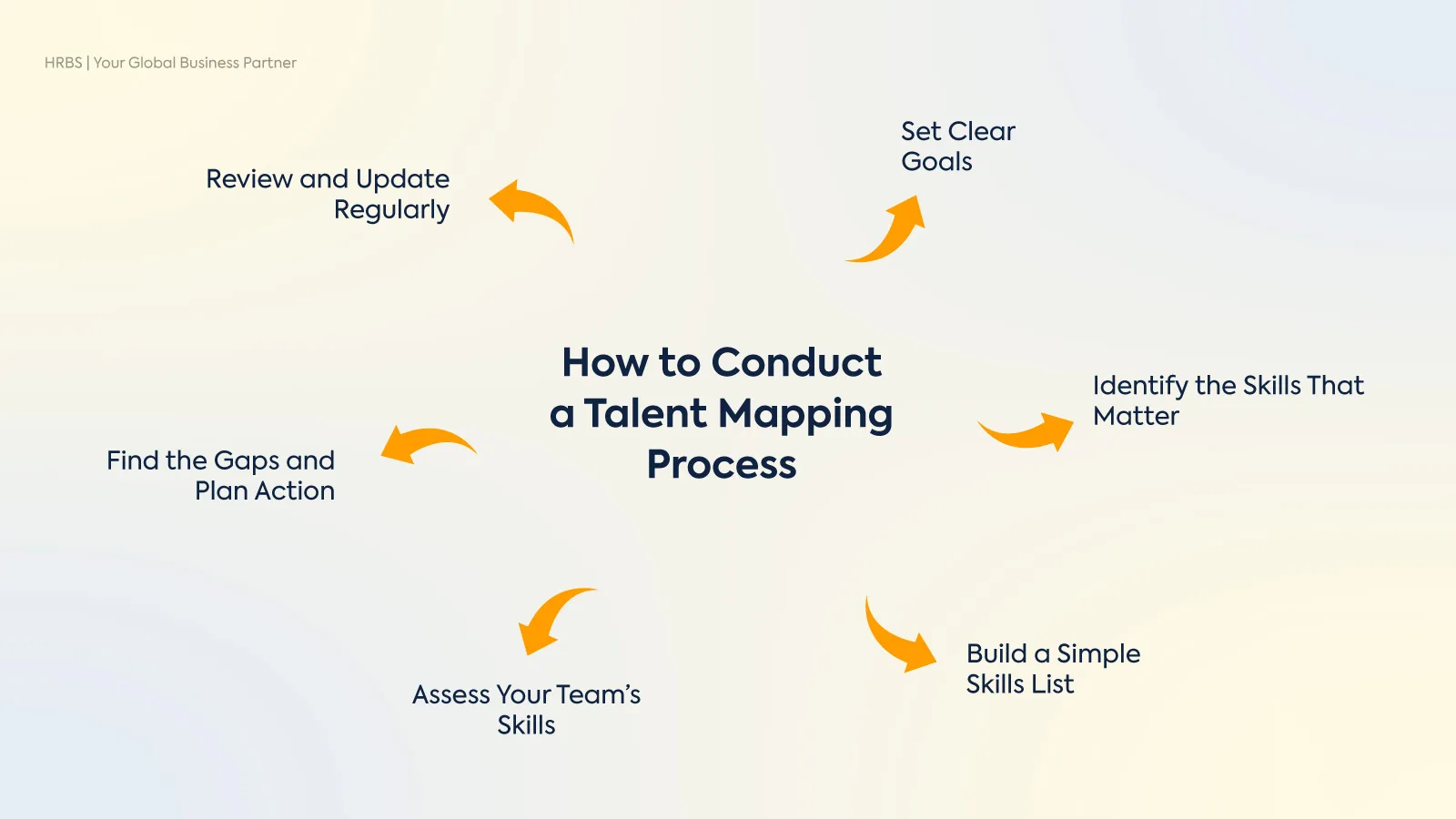
To build an effective talent mapping process, organizations must move away from reactive hiring and adopt a structured, data-driven framework. Executing this strategy requires aligning human resources directly with long-term business goals through skills analysis and market intelligence.
Start by connecting workforce planning with the company’s long-term growth plans. If the business intends to launch new products or enter new markets, determine the specific capabilities required to achieve those goals. Shift from writing traditional job descriptions to building a dynamic skills inventory. Define the exact technical abilities, certifications, and capabilities needed for critical and emerging roles.
Before searching externally, complete a thorough evaluation of existing talent. Gather qualitative and quantitative data using performance reviews, multi-source feedback, and capability assessments. Utilize a performance versus potential matrix to evaluate employees. This matrix highlights who is ready for advancement, who needs targeted development, and who requires performance support.
Compare future skill requirements against current workforce capabilities to reveal critical gaps and succession vulnerabilities. Prioritize key positions that drive daily operations or revenue generation. Identify roles where operational continuity is at risk if a key employee leaves unexpectedly.
Analyze the external talent landscape to maintain a competitive advantage. Research where target candidates work, what skills competitors hire for, and how compensation packages compare across the industry. Use competitive insights to understand geographic talent hubs and industry standards. If competitors offer superior career growth for critical roles, adjust your internal employee value proposition accordingly.
Create active pipelines to address identified talent shortages before vacancies open. Design targeted individual development plans and skill-building programs to prepare high-potential employees for future leadership roles. Simultaneously, source passive candidates and organize your network by hiring readiness, categorizing individuals for immediate outreach, mid-term contact, or long-term engagement.
A talent map is an evolving tool that requires continuous updates as business priorities and technologies change. Establish regular review cycles to keep the framework aligned with organizational strategy. Track key metrics to measure impact, including time-to-fill comparisons between mapped and unmapped roles, internal mobility rates, quality-of-hire scores, and candidate conversion rates.
What Are the Benefits of Talent Mapping?
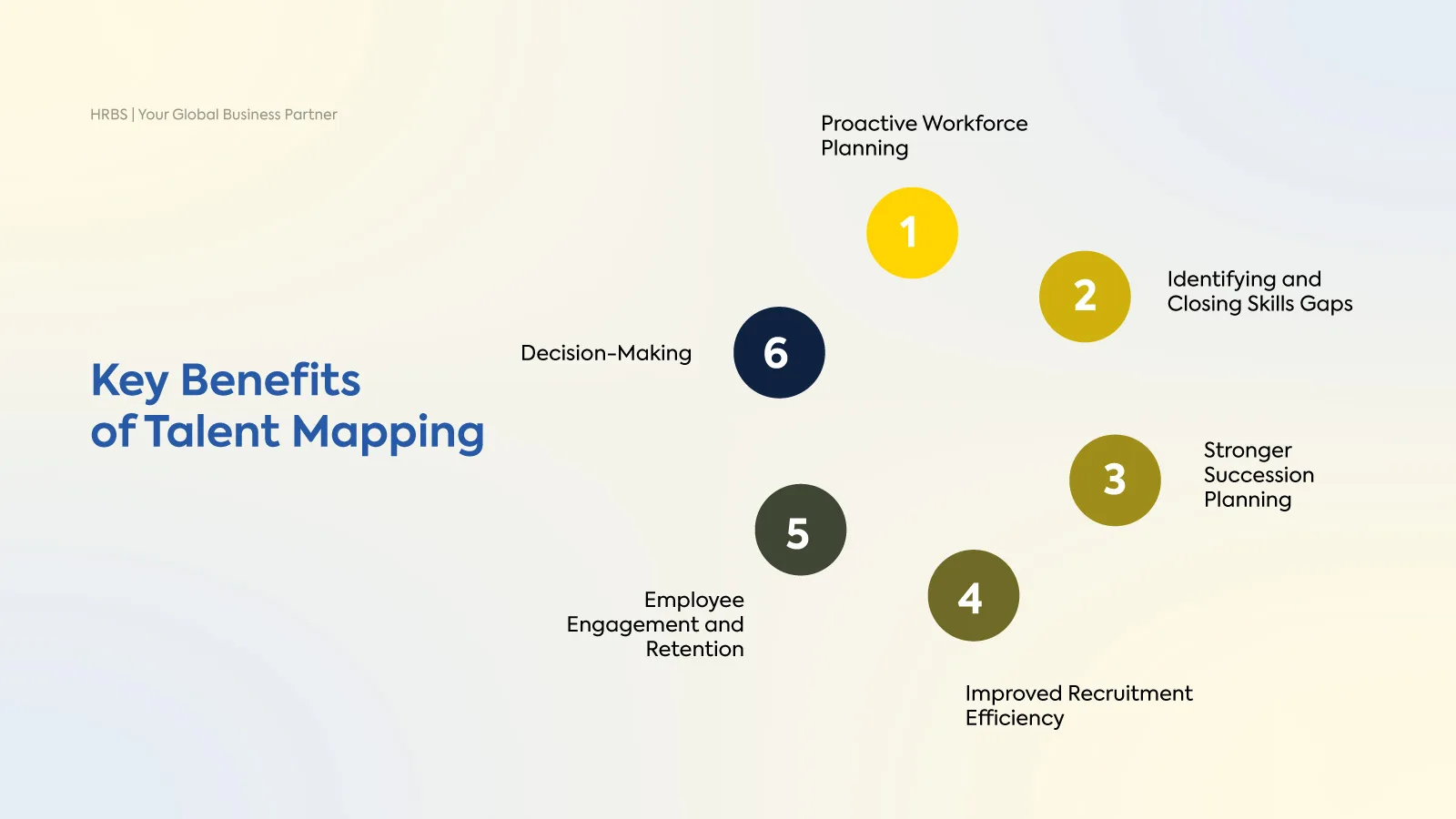
Organizations that implement talent mapping transform their hiring from a reactive scramble into an organized, evidence-based system. This method offers immediate operational advantages and long-term financial benefits.
Here are the primary business advantages of a well-executed talent map:
- Accelerates Hiring and Lowers Costs: Having a pre-vetted network of passive candidates drastically cuts the time-to-fill for critical roles. Faster hiring cycles directly reduce agency fees, lower advertising costs, and minimize revenue lost to vacant positions.
- Secures Leadership Continuity: By tracking in-house capabilities and career goals, companies can prepare existing staff for management roles before current leaders depart. This prevents operational disruptions and productivity drops during executive transitions.
- Closes Skill Deficits Early: A clear audit of workforce abilities highlights exact areas where expertise is missing. This allows teams to deploy targeted training or initiate specific hiring searches before a minor deficit impacts business performance.
- Increases Employee Retention: Employees stay longer when they see clear advancement paths. Documenting individual capabilities and matching them to future company needs provides staff with tangible growth opportunities, significantly reducing costly turnover.
- Optimizes Compensation Budgets: Gathering market intelligence helps organizations understand exactly what competitors pay for specific abilities. This prevents overpaying for new hires while ensuring top performers receive fair salaries that stop them from leaving.
- Reduces Hiring Bias: Evaluating staff based strictly on audited capabilities rather than subjective opinions creates a fair review process. This objective approach naturally uncovers a wider, more diverse range of qualified professionals who might otherwise be overlooked.
- Replaces Guesswork with Evidence: This process shifts promotion and hiring decisions away from subjective manager bias. Using hard metrics, peer feedback, and capability audits ensures organizations place the right people in the right roles based on proven merit.
Talent Mapping Key Elements
Talent Mapping Key Elements
A successful talent mapping framework requires several foundational components to deliver accurate insights and guide long-term planning. Without these core elements, workforce planning relies on guesswork rather than reliable data.
The essential components of an effective talent map include:
- Explicit Objectives: Every mapping initiative must start with a clearly defined purpose, such as preparing for market expansion or building a leadership bench. A specific goal ensures the data collected serves a practical business function.
- Comprehensive Skill Inventory: This is a detailed record of every capability present within the organization. Instead of relying solely on job titles, the inventory tracks technical know-how, professional certifications, and practical competencies.
- Objective Talent Assessment: This involves evaluating staff performance and future potential using multi-source feedback, performance metrics, and peer reviews. It provides an accurate baseline of what employees can achieve today and tomorrow.
- Future Demand Forecasting: This component anticipates the roles, technologies, and expertise the company will require as the industry evolves. It ensures the organization stays ahead of market shifts rather than reacting to them.
- External Market Intelligence: This requires researching competitor staffing trends, talent availability across geographic regions, and industry compensation benchmarks. It reveals how internal capabilities measure up against the broader market.
- Actionable Execution Plans: A talent map holds no value if it remains stored in a database. This element bridges the gap between insights and execution, outlining specific steps for targeted training, career pathing, and recruitment.
Common Challenges of Talent Mapping
Even well-planned talent mapping can run into obstacles. Common issues organizations face include:
- Old or Missing Data: Skill and performance records are often scattered or out of date. This leads to poor decisions because the findings being used no longer match the current reality of the team. Using old points often means training people for things they already know.
- Lack of Support: Talent mapping fails if leaders do not actively back the process or if employees do not see how it helps them. Without clear backing from management, the results are ignored during hiring or promotion rounds, making the effort a waste of time.
- Fast Shifts in Technology:The skills your business needs can change quickly as new tools appear. Talent profiles become irrelevant if they are only reviewed once a year. This leaves the company unable to use new software that competitors are already using to work faster.
- Unfair Evaluations: Relying on just one person’s opinion can lead to biased results. To get an honest view, gather facts from multiple sources, including peers and different managers. Focus on real work results rather than just opinions to ensure every employee is judged fairly.
- High Time Commitment: Collecting and managing talent details takes significant time away from other work. This load can slow down managers and cause the data to be neglected. This delay often forces the company to spend more on urgent external hires.
- Privacy Concerns: Employees may not share their true skills if they fear the records will be used against them. A lack of trust prevents honest participation. When employees hide their skills, the resulting business plan is based on false assumptions.
- Ignoring Internal Talent: Only looking outside for new hires is a major mistake that increases costs. Failing to map your current team means you miss people who are already ready to step up. This causes a long wait for new hires while current talent looks for work elsewhere.
Failing to Take Action: Many companies collect talent details but never use them to make changes. These points have no value if they are just stored and never used to change training or hiring paths. This results in no real growth despite the effort put into the map.
Hire and Manage Talent with HRBS
Talent mapping is about placing the best people in roles that fit them perfectly. HRBS helps you find top candidates and turn them into valuable team members with confidence. By removing the high fixed costs of setting up local entities, we allow you to enter new markets with zero legal delays.
We help you map out real salary details to create competitive job offers, compare hiring costs across different countries, and stay updated on the latest pay trends. This ensures you never overpay for talent while still attracting the best experts in the region. From hiring to local compliance and everything in between, HRBS helps you map and manage the people you need to grow. We turn your workforce needs into a clear plan that saves time and protects your business from hiring risks. Get started with us today, reach out to our team and build your talent plan.
FAQ’s
What is talent mapping and how does it work?
Talent mapping is the process of matching your current team’s abilities with your company’s future needs. It works by creating a list of the skills you have right now and comparing them to the skills you will need to hit your business goals. By looking at where you are missing expertise, you can make better choices about who to train, who to promote, and when to hire new people.
How often should we update our talent map?
You should review your talent map at least twice a year. It is best to update your records whenever you launch a new project, adopt new tools, or move people into different teams. Keeping these details current ensures you are not making choices based on old findings.
Who should be involved in the talent mapping process?
A successful map needs input from a mix of people, including HR, managers, and the employees themselves. Involving different voices provides a more honest view of current abilities and potential. This ensures your results represent the whole company rather than just one person’s opinion.
Can talent mapping be useful for small organizations?
Yes, businesses of all sizes benefit from this process. While large companies may use complex tools, smaller teams can use simple lists to track skills and plan for the future. It helps small businesses avoid the high cost of a bad hire by knowing exactly which skills they need before they start looking for candidates.
What steps can we take to ensure our talent mapping is unbiased?
To keep the process fair, gather evidence from multiple sources, such as peer feedback and real work results, rather than just one manager’s review. Providing clear rules for how skills are measured prevents bias and ensures that everyone is judged on their actual performance.
How can we motivate employees to participate in talent mapping?
Be open about the benefits for employees, such as clearer career paths, learning opportunities, and skill recognition. Involving them in the process, respecting their input, and showing how the results lead to positive outcomes can increase engagement and trust.