Human Resource outsourcing (HRO) refers to the process of hiring an independent agency to manage individual or entire workforce operations, which commonly include payroll processing, benefits administration, recruitment, and employee training. Organizations adopt this practice to reduce overhead expenses, improve workflow efficiency, and secure access to specialized market expertise and cloud-based software platforms that would otherwise remain too expensive to build in-house.
Businesses can engage agencies for targeted administrative workflows or full-scale team administration, utilizing local or international support depending on exact corporate requirements, available financial resources, and labor laws. Traditional outsourcing arrangements keep direct employer liability with the client enterprise while delivering significant cost savings through minimized administrative delays and advanced software tools. In this guide you will learn how this model works, how to compare costs versus building an in-house team, and how to find a partner that supports your goals.
What is HR Outsourcing?
HR outsourcing is a business practice where an organization contracts an independent agency to manage some or all of its workforce management functions. Rather than maintaining a full-time human resources department, companies delegate routine operations—such as payroll processing, employee benefits administration, talent recruitment, and labor law tracking—to specialized providers.
This model allows businesses to access advanced software tools, ensure accurate tax filings, and maintain local employment compliance without high overhead costs. By shifting administrative responsibilities to a dedicated provider, leadership teams can focus entirely on scaling operations, improving core products, and driving revenue growth.
Common HR Functions that Are Outsourced
Companies partner with specialized firms to manage complex workforce operations, ensuring legal compliance, financial accuracy, and team scalability. Here are the core human resource functions that service providers handle:
Payroll Management
Payroll is a critical business function where accuracy is mandatory. Outsourcing this task puts skilled specialists to work on wage calculation, tax compliance, and reporting. This ensures your workforce is paid correctly and on time while keeping your business safe from financial penalties.
- Salary & Tax Calculation: Calculates net wages, benefit deductions, and tax withholdings with precision, ensuring employees are paid accurately on time.
- Leave Tracking: Links time-off requests, sick leave, and overtime directly to payroll to prevent manual calculation mistakes and pay disputes.
- Automated Accuracy: Uses specialized software to detect discrepancies before pay cycles run, saving time and ensuring financial reliability.
- Data Security: Safeguards sensitive banking and personal information while verifying employee identities to prevent fraud and secure audit trails.
- Legal Compliance: Manages the submission of required tax documents and follows local labor laws, keeping your business safe from government fines.
Employee Benefits Administration
Offering a strong benefits package is essential for attracting and keeping skilled team members. Outsourcing this function links your business with specialists who understand market trends and current regulations, allowing you to provide quality health and care options without administrative burdens.
- Customized Plans: Designs health, retirement, and care packages that fit your company budget and help keep key workers.
- Enrollment Management: Manages sign-up processes and insurance processing so employees receive coverage without delays.
- Billing Audits: Reviews supplier invoices and checks accounts to spot mistakes and prevent overpaying for insurance services.
- Direct Support: Serves as the main contact for your team, handling questions and fixing coverage issues so managers can skip those tasks.
- Compliance Monitoring: Tracks changes in health and tax laws to keep your benefits program matched with current legal requirements.
Recruitment and Headhunting
Finding skilled talent helps business growth, but the hiring process takes up too much staff time. Outsourcing allows companies to hand the entire hiring cycle to specialized agencies, using broad talent networks and screening tools to fill open roles efficiently.
- Talent Sourcing: Uses global databases and screening technology to find and interview qualified candidates quickly based on your specific requirements.
- Job Management: Writes clear role descriptions and posts them on effective platforms to attract high-quality applicants.
- Skill Verification: Conducts technical tests and practical assessments to confirm candidates possess the abilities they claim before you make an offer.
- Structured Onboarding: Manages new hire paperwork, policy training, and system setup so employees are productive from day one.
Compliance and Risk Management
Ignoring local employment rules creates immediate financial and legal exposure. Outsourcing compliance assigns this responsibility to specialists who track regulations daily, ensuring every contract and workplace policy follows current standards to prevent lawsuits and fines.
- Regulatory Monitoring: Tracks daily changes in tax codes and employment rules so your business operations stay up to date.
- Policy Development: Drafts clear safety guidelines and conduct rules that define workplace behavior and limit legal liability.
- Risk Assessments: Reviews current company processes to identify and fix compliance gaps before they turn into legal problems.
- Dispute Management: Handles workplace investigations with thorough documentation to protect your business from wrongful termination claims.
- Audit Preparation: Maintains organized records for government reporting to ensure your business passes inspections without penalties.
Performance Management
Growing a strong team requires regular feedback rather than annual reviews alone. Outsourcing this function establishes structured responsibility, linking individual performance directly to company targets so your workforce expands alongside revenue.
- Goal Setting & KPIs: Establishes performance targets that link routine daily tasks to broader business objectives.
- Structured Feedback: Collects regular input from managers and peers to address performance issues early and recognize strong results.
- Performance Analytics: Tracks productivity trends using objective data to help you identify top performers and make fair decisions about raises or promotions.
- Skill Development: Creates personalized training plans, workshops, and certifications to close skill gaps and improve staff retention.
- Inclusive Culture: Implements fair workplace practices that promote diversity, improve morale, and keep employees engaged.
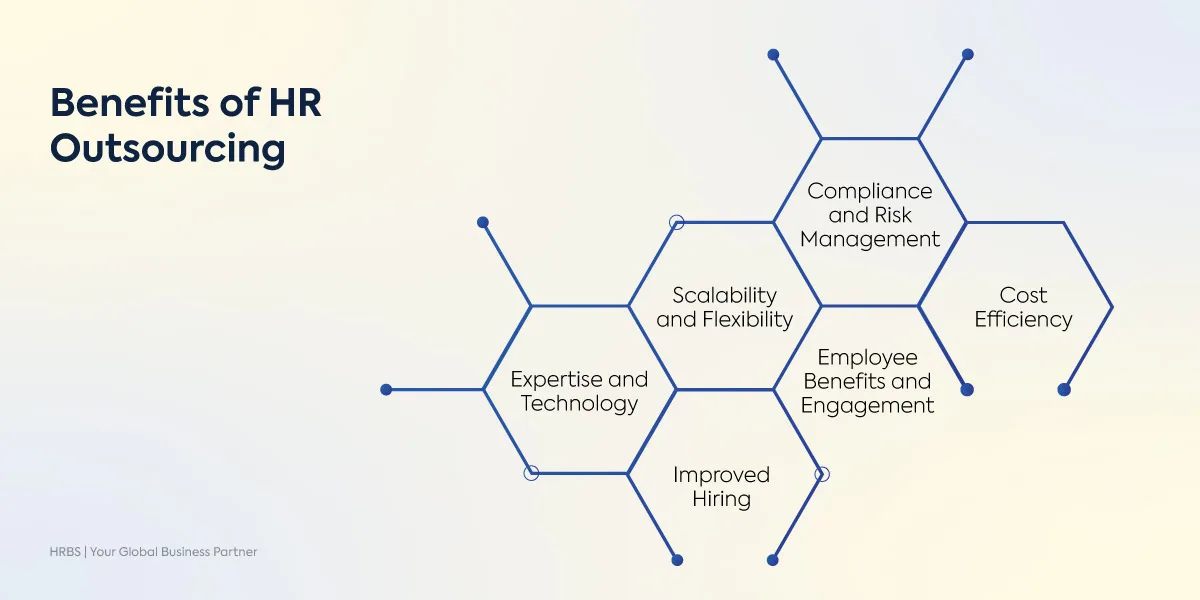
Key Benefits of HR Outsourcing
HR outsourcing provides companies with core advantages, including reduced overhead expenses, access to specialized labor experts, minimized legal risks, and enhanced employee benefits. By delegating administrative tasks to a dedicated provider, organizations save time and focus entirely on core business growth.
- Cost Reductions: Eliminates the high expense of maintaining full-time internal staff, dedicated office space, and expensive software, converting fixed overhead into variable costs that scale directly with company growth. This model removes recruitment costs, training expenses, and internal personnel overhead associated with managing an internal human resources department.
- Legal Compliance: Keeps business operations compliant with changing tax codes, employment laws, and labor regulations to prevent costly government fines and legal disputes. External specialists manage accurate statutory filings, track federal and local legislative updates, and maintain proper documentation for all labor inspections.
- Access to Technology: Connects businesses to advanced human resource software and digital tracking tools without requiring large upfront capital investments or internal IT setup. Organizations gain immediate use of cloud-based management platforms, automated self-service portals, and detailed analytics dashboards.
- Scalability: Allows companies to quickly adjust support resources as business needs change, ensuring organizations only pay for services currently required. This flexibility supports rapid team expansion, seasonal workforce surges, or structural downsizing without disruption to daily operations.
- Better Employee Benefits: Combines purchasing power across multiple organizations to secure cost-effective health insurance and retirement packages that attract and keep skilled workers. Businesses can offer enterprise-grade wellness programs and comprehensive insurance plans that smaller firms cannot negotiate independently.
- Faster Hiring: Speeds up talent acquisition by using established candidate networks and digital screening tools to fill open roles without burdening internal team members. Providers handle resume parsing, initial interviews, and practical skills assessments to reduce overall time-to-hire metrics.
- Enhanced Data Security: Safeguards sensitive employee records, banking details, and tax information through encrypted software systems and strict privacy protocols that prevent data breaches. Providers implement multi-factor authentication, secure role-based access controls, and compliance with data privacy laws.
- Core Business Focus: Frees leadership teams from routine administrative paperwork, allowing executives to concentrate entirely on product development, sales, and long-term revenue goals. Shifting human resource burdens away from management lets companies direct all energy toward market expansion and innovation.
- Improved Employee Retention: Enhances staff satisfaction through reliable payroll processing, structured performance feedback, and consistent workplace support that reduces turnover. Clear compensation administration, regular performance tracking, and rapid issue resolution build workplace trust.
- Risk Mitigation: Mitigates employment risks by implementing standard workplace policies, handling labor disputes professionally, and ensuring proper documentation for all personnel actions. Clear employee handbooks, documented disciplinary procedures, and formal grievance handling protect against wrongful termination claims.
- Global Workforce Expansion: Facilitates international hiring and cross-border team management without requiring complex local entity setups or navigating foreign labor laws manually. Companies can hire remote international talent while managing multi-currency payroll distribution and local tax remittance accurately.
HR Outsourcing Process: A Step-by-Step Guide
Transitioning from internal human resource administration to an external provider requires a structured framework. Following a clear, sequential implementation process prevents operational disruption, protects data security, and ensures maximum return on investment.Step 1: Conduct an Internal Needs Assessment
Start by reviewing current human resource operations to pinpoint administrative bottlenecks, compliance vulnerabilities, and time-wasting workflows. Determining which tasks consume the most internal staff time—such as payroll processing, leave tracking, or compliance paperwork—helps clarify whether you need full external support or selective task delegation, ensuring you only pay for necessary services.
Step 2: Research and Shortlist Potential Partners
Evaluate potential service providers based on sector experience, technological capabilities, and track records in handling similar workforce sizes. Choosing partners familiar with your specific sector rules, labor standards, and operating environment while reviewing case studies and client testimonials helps evaluate reliability, response speed, and overall service quality.
Step 3: Compare Pricing Models and Service Agreements
Analyze the financial structures offered by providers to determine which billing model best matches your cash flow and growth objectives. Reviewing options like Per-Employee-Per-Month fees, percentage of payroll, or fixed monthly retainers allows you to understand cost structures while ensuring contracts outline clear performance targets, response times, issue resolution paths, and exit clauses.
Step 4: Audit Security and Compliance Protocols
Protect sensitive employee records and corporate data by validating the security infrastructure of shortlisted providers before signing any contract. Confirming the use of advanced encryption protocols, secure role-based access controls, and multi-factor authentication ensures the agency complies with local data privacy laws, tax codes, and labor standards to minimize corporate liability.
Step 5: Execute a Structured Transition Plan
Launch a managed handover process to transfer employee data and system access without interrupting daily business operations. Securely transferring payroll records, tax forms, and employee profiles into the provider’s cloud-based platform while transparently informing your team about the new support structure establishes dedicated account managers and makes it clear how to submit requests.
Step 6: Monitor Performance and Optimize
Review ongoing service results regularly to measure accuracy, speed, and overall value against initial business goals. Monitoring payroll errors , onboarding speed, and employee satisfaction scores on a quarterly basis enables you to refine the service agreement as your business expands, ensuring the provider continues to support your long-term operational growth.
Key Questions for Businesses Considering HR Outsourcing
Before signing an agreement, leadership teams should evaluate key factors to ensure alignment and protect company interests.
- What tasks create the highest risk or time loss? Identify whether payroll, benefits, or compliance takes up internal time so you contract only for required support.
- Does the provider have industry experience? Confirm the agency understands your specific sector’s labor regulations, safety codes, and working conditions.
- What is the exact pricing structure? Clarify whether billing uses a per-employee fee or fixed retainer, and check for hidden setup or cancellation charges.
- How is employee data protected? Verify the provider uses advanced data encryption, role-based access controls, and strict privacy compliance measures.
- What performance guarantees are included? Review service-level agreements for payroll accuracy rates, response times, and resolution paths.
- How smooth is the onboarding process? Ensure the provider offers a structured implementation plan that transitions data without disrupting daily business activities.
- What technology platforms and software tools are provided? Check if you gain access to cloud-based portals, automated self-service dashboards, and real-time reporting features.
- Who will manage our account on a daily basis? Confirm whether you receive a dedicated account manager or direct support channel for fast problem-solving.
How to Choose the Right HR Outsourcing Provider
Choosing the right human resource outsourcing provider requires evaluating your organization’s specific operational scale, budget limits, and compliance requirements. Selecting the best partner ensures long-term efficiency without locking your business into inflexible or costly agreements.
To make an informed decision, evaluate providers across these core areas:
- Define Exact Operational Scope: Outline which functions need outside assistance—such as payroll processing, benefits administration, or recruitment, compared to tasks kept in-house. This ensures you only pay for required support.
- Evaluate the Provider Model: Understand the difference between traditional administrative support agencies and professional employer organizations that enter co-employment agreements. Choose the structure that matches your preferred level of operational control.
- Check Technology Compatibility: Ensure the provider’s software platform connects smoothly with your current systems and features advanced data encryption, multi-factor authentication, and strict compliance with privacy regulations.
- Verify Regulatory and Industry Experience: Confirm that the agency has a demonstrated track record working within your specific sector and understands local, state, and federal labor laws applicable to your workforce.
- Review Pricing and Hidden Fees: Analyze the complete fee structure—whether per-employee monthly billing, percentage of payroll, or fixed monthly retainers, and directly check for setup charges, software onboarding costs, or early cancellation penalties.
- Review Service Agreements and Support: Look at contract terms for guaranteed payroll accuracy rates, maximum inquiry response times, and whether you receive a dedicated account manager rather than a general customer service queue.
Challenges and Risks of Outsourcing HR Services
Hiring a third-party agency to manage workforce operations lowers overhead, yet companies must prepare for operational, legal, and financial risks before signing an agreement. Understanding these potential drawbacks allows organizations to build strong internal protections and maintain total oversight.
- Loss of Oversight: Passing daily personnel tasks to an independent partner reduces direct visibility. Without clear communication guidelines, minor administrative delays turn into major operational stalls before internal managers see the problem.
- Legal Liability: The client business remains fully responsible for compliance mistakes, even when an outsourced provider handles the work. If the agency miscalculates payroll taxes or misses filing deadlines, the company still faces government fines and legal penalties.
- Cultural Disconnect: Employees can feel undervalued when remote support staff handle sensitive workplace issues. A lack of personal connection lowers workplace morale and increases staff turnover if support feels completely impersonal.
- Hidden Costs: Unclear contract terms often cause budget overruns. Companies frequently face surprise charges for extra service requests, urgent payroll processing, software setup fees, or heavy penalties for cancelling an agreement early.
- Data Security Weaknesses: Sharing employee banking details, social security numbers, and tax records with a third-party agency introduces added cyber threats. A single data breach at the provider level damages employee trust and triggers costly lawsuits.
- Service Inconsistency: Lower-tier providers often struggle to maintain service quality during heavy workloads, such as year-end tax reporting or seasonal hiring surges. This leads to slow response times, processing mistakes, and frustrated workers.
- Technology Mismatches: Merging company systems with a third-party provider’s software frequently causes data formatting issues. Without proper compatibility testing, payroll records or employee benefits data can sync incorrectly, leading to administrative confusion.
How Much Does HR Outsourcing Cost?
HR outsourcing costs depend entirely on the billing structure, workforce volume, and service scope selected by an organization. Instead of relying on a single flat rate, providers use specific pricing models designed to match different business sizes and administrative needs.
Core Pricing Models
- Per-Employee-Per-Month (PEPM): A predictable billing model where the provider charges a set fee for every worker on the payroll. This model scales directly as headcount expands, offering basic administration or comprehensive service tiers depending on organizational requirements.
- Percentage of Payroll: A structure where agencies charge a variable percentage of total gross pay. This option is common for co-employment models like professional employer organizations, where the fee covers bundled benefits administration, tax filing, and risk management.
- Fixed Monthly Retainer: A flat fee covering a pre-determined set of administrative services, such as compliance tracking or handbook creation, regardless of the hours spent. This works best for organizations needing consistent support without headcount fluctuations.
- Project-Based Support: A single fee for a specific, one-time task, such as setting up a new employee benefits platform, auditing workplace safety policies, or executing compensation reviews based on project complexity.
Hidden Factors That Influence Total Costs
Beyond the base contract rate, several hidden variables can increase monthly expenses:
- System Integration Fees: One-time charges for migrating company records, payroll histories, and employee files into the provider’s software platform.
- Employee Turnover Volume: Extra charges in high-turnover sectors where agencies frequently process new hires, background checks, and exit paperwork.
- Custom Reporting Charges: Additional billing for specialized data breakdowns and custom analytics required for executive board meetings or investor reporting.
- Late Submission Penalties: Fees applied when payroll data or timesheets are submitted late and require urgent, manual processing.
- Currency Exchange Rates: For international or cross-border outsourcing arrangements, fluctuating foreign exchange rates can alter monthly invoices if not locked into the master contract.
Industries That Benefit Most From Outsourcing HR
While many companies outsource human resource tasks to lower overhead expenses, specific sectors face strict compliance demands, labor rules, or workforce fluctuations that make professional support necessary.
- Technology & Startups: Fast-growing tech companies must scale headcounts rapidly to meet investor expectations without building large internal departments that slow down product development.
- Healthcare & Medical Services: Medical facilities manage strict licensing standards and changing safety codes, relying on partners to handle background checks and certifications so staff focus on patient care.
- Manufacturing & Logistics: Industrial operations manage complex shift schedules, labor standards, and safety reporting, where outsourced support ensures accuracy during seasonal production surges.
- Retail & Hospitality: Businesses dealing with high staff turnover and seasonal hiring rushes use specialized recruitment services to stay fully staffed during peak operating periods.
- Financial Services: Banks and investment firms operate under strict security and reporting rules, utilizing experienced partners to protect sensitive records and maintain compliance.
- Construction & Real Estate: Companies manage multi-site projects, strict safety standards, and prevailing wage rules, relying on external partners to handle complex labor compliance and workers’ compensation audits.
- Nonprofit Organizations: Organizations operate on lean budgets while managing strict grant requirements and board reporting, utilizing outsourced HR to administer payroll and benefits without adding internal overhead.
- Professional Services & Agencies: Fast-paced marketing, legal, and consulting firms scale headcounts based on client project demands, leveraging specialized providers for rapid recruitment and contract management.
Simplify Your Expansion with HR Business Solutions (HRBS)
Do not let complex local rules slow down your growth. Whether you need to manage a global workforce or expand operations into Pakistan, we deliver the secure infrastructure you need to operate without fear of legal penalties.
- Payroll Outsourcing: We process salaries, tax filings, and social security payments with dependability. Our team tracks every change in local rules to ensure your business remains aligned with tax authorities, protecting you from fines.
- Streamlined Recruitment: Stop losing time on bad hires. We handle the entire cycle, sourcing, screening, and background checks, to help you build a reliable workforce without the administrative burden.
- Employer of Record (EOR) Services: Hire staff in Pakistan without registering a local company. We act as the legal employer, handling contracts and risks, while you retain full operational control over your team’s daily work. This is the safest way to enter the Pakistani market.
- Complete Benefit Management: We handle health insurance, retirement plans, and paid leave, ensuring your employees receive every statutory benefit required by law. This keeps your staff happy and your company safe from labor disputes.
- Dedicated Support: You get a direct account manager, not a chatbot. We provide clear reporting and fast answers, ensuring you always know the exact status of your operations.
Get started with us today and see how easy it is to build, manage, and pay your team locally or globally with confidence and full compliance.
FAQ’s
What is HR Outsourcing (HRO) and how does it work?
HR Outsourcing (HRO) is the practice of hiring an external third-party provider to manage administrative, operational, or strategic human resource tasks. It works by contracting specialists to handle payroll processing, employee benefits administration, labor compliance tracking, and recruitment. Depending on the arrangement, providers operate through traditional administrative support models and co-employment agreements like Professional Employer Organizations, allowing businesses to scale support as workforce needs change.
How does HR outsourcing improve employee management?
HR outsourcing improves employee management by providing structured performance tracking, reliable payroll distribution, and consistent workplace support that reduces overall staff turnover. Employees gain cloud-based access to view pay stubs, update personal details, and manage time-off requests independently through self-service portals. Standardized performance evaluation tools help managers track productivity and provide clear career guidance, while independent HR professionals handle sensitive workplace issues and grievances objectively to build workforce trust.
Does outsourcing speed up the hiring process?
Yes, outsourcing speeds up the hiring process by utilizing established candidate networks, digital screening tools, and dedicated recruitment teams. Providers use automated resume parsing and practical skills assessments to filter candidates quickly, while external recruiters handle initial phone screens and interview scheduling so internal hiring managers can focus entirely on final-round candidates.
Is HR outsourcing a good option for small businesses?
Yes, HR outsourcing is a strong option for small businesses because it eliminates the high cost of maintaining a full-time internal human resource department. Small firms convert fixed overhead expenses into scalable variable costs while leveraging combined purchasing power across multiple organizations to offer competitive health insurance and retirement plans that attract skilled talent.
How does HR outsourcing help with legal compliance?
HR outsourcing helps with legal compliance by utilizing dedicated labor experts who monitor changing tax codes, employment laws, and workplace regulations. External providers manage accurate federal, state, and local tax filings on schedule while maintaining proper documentation for personnel actions and labor inspections, protecting companies from costly government fines and legal disputes.
What happens if an issue arises with an outsourced HR service?
If an issue arises, businesses rely on the problem-resolution paths and guaranteed response times outlined in their master service agreement. Organizations contact their assigned account manager or support team to investigate payroll errors, compliance questions, or employee disputes, guided by service level agreements that define clear remedies, escalation steps, and performance standards.
How long does the transition process take?
The transition process for HR outsourcing typically takes between 30 to 90 days, depending on company size, workforce volume, and data complexity. A structured onboarding plan involves auditing current workflows, migrating payroll histories and employee profiles into the provider’s software, and briefing internal teams to ensure zero disruption to daily business operations.
How employee data kept secure with HR outsourcing?
Employee data is protected through advanced security infrastructure maintained by reputable outsourcing providers. Providers use end-to-end data encryption, role-based access controls, and multi-factor authentication to secure private records, while leading agencies adhere to established data privacy laws to safeguard employee banking details, social security numbers, and tax identification documents against cyber threats.