Managing payroll across different locations often comes down to two main questions: What are payroll records, and how long should your business keep them? Payroll records are official files, including gross wage summaries, tax withholdings, statutory contributions, and net pay details, that track employee compensation.
Beyond basic administrative tasks, accurate payroll data gives leadership direct visibility into labor expenses. This financial insight helps management plan budgets, distribute resources efficiently, and support workforce expansion. Organized payroll documentation also prevents wage disputes, ensures compliant tax reporting, and establishes trust with employees. Since local compliance rules change across different countries and regions, following exact retention schedules keeps your business secure and prepared for any audit.
In this guide, we define what is a payroll record, its types, and its timeline, along with best practices to keep your information organized.
What are Payroll Records?
Payroll records are legally required documents that track all financial transactions related to employee compensation. These files provide a complete history of how a business calculates, processes, and distributes wages for every pay period.
To satisfy labor laws and tax regulations, a standard payroll record must document:
- Employee Information: Full name, identification numbers, job title, and employment dates.
- Earnings: Regular hours worked, gross wages, overtime pay, commissions, and bonuses.
- Deductions: Income tax withholdings, statutory employer contributions, and benefit premiums.
- Time and Attendance: Exact hours logged, paid time off, sick leave, and unpaid leave balances.
- Payment Details: Net pay amounts, pay period dates, and the exact payment method.
These documents serve as direct proof of payment accuracy. Businesses use up-to-date payroll documentation to meet statutory requirements, complete government tax audits, and resolve wage disputes.
Types of Payroll Records
Managing employee payment information requires organizing employment documentation into structured files. Essential payroll records include:
- Employee Information Records: Core paperwork containing legal names, residential addresses, social security numbers or tax IDs, employment start dates, and completed income tax withholding forms.
- Time and Attendance Records: Daily attendance sheets tracking hours worked, clock-in and clock-out times, overtime hours, and shift schedules used to calculate gross pay accurately.
- Earnings and Wage Records: Detailed historical documentation showing gross earnings, regular pay rates, hourly wages, piece rates, bonuses, commissions, and total earnings per pay cycle.
- Tax Withholding and Deduction Records: Documentation of federal, state, and local income taxes withheld, alongside statutory deductions like social security, medicare, and unemployment insurance.
- Employee Benefit Deduction Records: Documentation covering worker contributions to health insurance, dental plans, retirement accounts, and other standard payroll deductions.
- Leave and Absence Records: Tracking sheets for paid time off, vacation days, sick leave, and unpaid absences to ensure accurate balance calculations.
- Payroll Disbursement Reports: Final accounting registers, canceled checks, direct deposit receipts, and payment summaries verifying that net wages were distributed to workers.
Why Payroll Records are Important?
Maintaining accurate payroll records goes beyond routine administration; it is a strict requirement to prevent financial penalties and legal liabilities. Complete payroll documentation is important to ensure:
- Legal and Tax Compliance: Employers must keep detailed records to meet federal and local labor regulations. Missing or inaccurate data leads directly to regulatory fines and legal action.
- Managing Government Audits: Tax authorities and labor departments conduct regular reviews. Organized documentation allows management to respond to audit inquiries immediately, minimizing operational disruptions and penalty risks.
- Addressing Wage Disputes: Disagreements regarding overtime, missed hours, or deductions occur without warning. Detailed records supply exact data to address these claims accurately, securing the rights of both the employer and the workforce.
- Financial Accuracy: Tracking exact hours and deductions prevents compensation miscalculations. This guarantees employees receive exact pay on time while lowering the administrative costs associated with retroactive adjustments.
- Workplace Transparency: Providing clear payslips that show exact wage calculations creates a transparent workplace. This practice builds employee retention and positions the company as a reliable employer.
- Control Over Labor Costs: Tracking payroll data gives leadership direct insight into salary expenses, overtime trends, and statutory contributions. This data helps management plan budgets and control labor spending.
- Scalable Corporate Growth: Structured documentation simplifies the process of entering new global markets. Pay files allow multinational businesses to adapt seamlessly to foreign tax codes and local employment rules.
Data Confidentiality and Security: Storing employee compensation details properly reduces the risk of internal data leaks. Structured records keep individual wages private and compliant with strict international privacy laws.
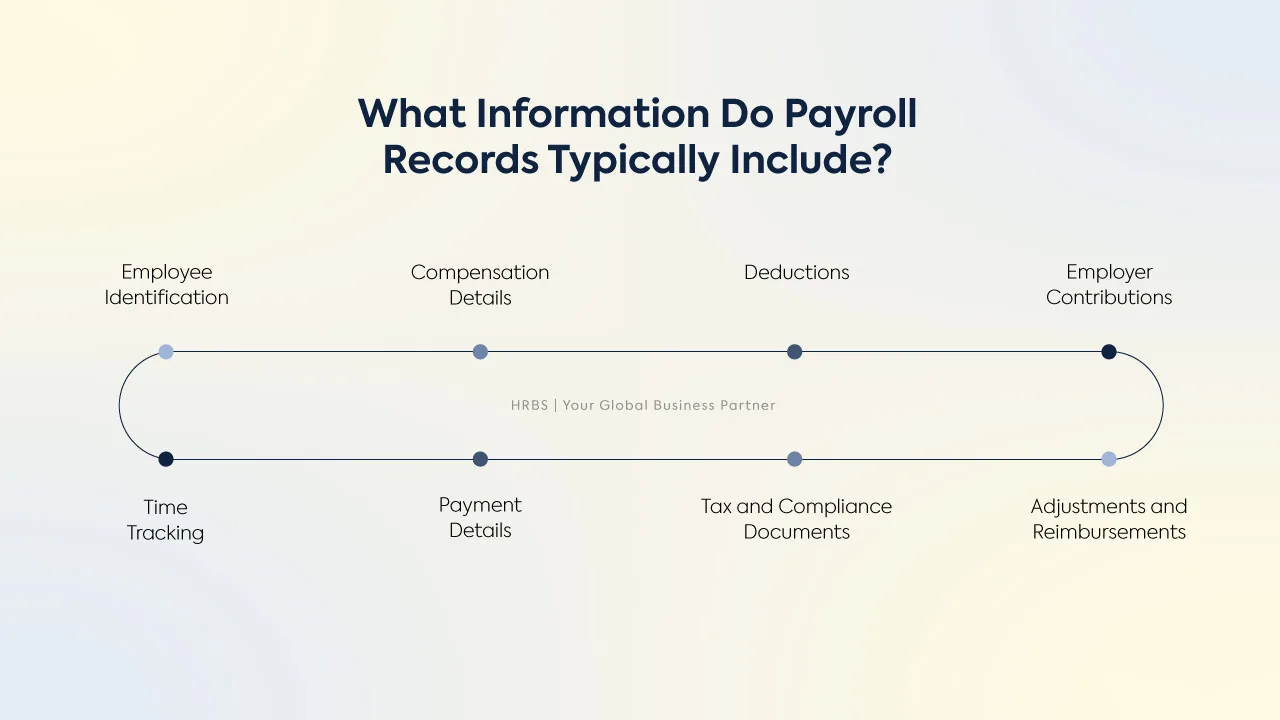
What Information do Payroll Records Typically Include?
Payroll records keep compensation details and tax data required for legal compliance and financial tracking. Satisfying labor department audits and corporate accounting standards requires complete personnel documentation. These documents must include:
- Employee Profile Data: Full legal name, current address, official job title, hire date, tax identification numbers, and employment classification establish worker identity. Keeping personal details updated prevents misclassification issues and ensures accurate annual tax reporting.
- Time and Attendance Records: Regular hours worked, daily clock-in and clock-out records, paid leave balances, unpaid absences, and overtime hours dictate wage calculations. Maintaining complete attendance records protects businesses from costly wage disputes and labor department penalties.
- Gross Wages: Income earned before taxes forms base compensation amounts. It covers base salary, hourly wages, performance bonuses, sales commissions, overtime pay, and fixed allowances for housing or transport.
- Taxes and Statutory Withholdings: Deductions for federal, state, and local income taxes operate with mandatory government contributions like EOBI, social security, and provident funds. Submitting withheld amounts on time prevents regulatory fines and maintains corporate legal standing.
- Voluntary Deductions: Employee-requested deductions cover private health insurance premiums, retirement fund contributions, worker association fees, company loan repayments, and early payments. Documenting worker agreement for each deduction protects employers from illegal withholding claims.
- Employer Contributions: Amounts employers pay toward employee benefits include retirement savings, corporate health plans, and mandatory state taxes. Tracking employer-paid benefits accurately guarantees proper expense reporting and improves overall budget planning.
- Net Pay: Final take-home amounts transferred to employees after all deductions serve as official proof of payment completion. Generating clear payslips displaying net earnings creates workplace trust and reduces HR questions.
- Pay Period Details: Start and end dates of each pay cycle, payment frequency, official disbursement dates, payment methods, and bank transaction IDs enable accurate financial tracking. Consistent scheduling helps workers manage personal finances while keeping corporate cash flow predictable.
Payroll Records Retention: How Long to Keep them?
Employers must keep payroll documents for the exact period mandated by local labor laws and regional tax authorities. Meeting these legal timelines ensures full compliance during official audits and reviews.
- Wage and Time Data: Businesses must maintain employee wage details, time tracking data, and regular attendance hours for at least three to five years. This timeframe helps resolve workplace disputes and satisfies provincial labor oversight requirements.
- Tax and Statutory Withholdings: Federal agencies like the FBR require companies to hold employment tax documents for up to six years after the final filing period. These files validate you paid the correct income taxes and required government contributions, like EOBI, on time.
- Employment Contracts and Agreements: Keeping final termination documents, signed worker agreements, and workplace injury reports for up to ten years protects the business from future legal disputes. Extended timelines ensure HR departments can manage past legal inquiries effectively.
- Retirement and Pension Contributions: Documents outlining employee provident funds, gratuity payouts, and corporate retirement plans demand extended protection. Holding these files ensures accurate benefit distribution when workers leave the company.
- Annual Financial Statements: Formal business reporting files and statutory registers require ongoing archiving. Securing these documents guarantees compliance with the Companies Act 2017 and supports future corporate audits.
- Digital Audit Trails and System Logs: Authorities expect businesses to hold digital logs of all payslip modifications and direct deposit updates. Keeping this digital footprint alongside standard files prevents fraud accusations and ensures complete transparency.
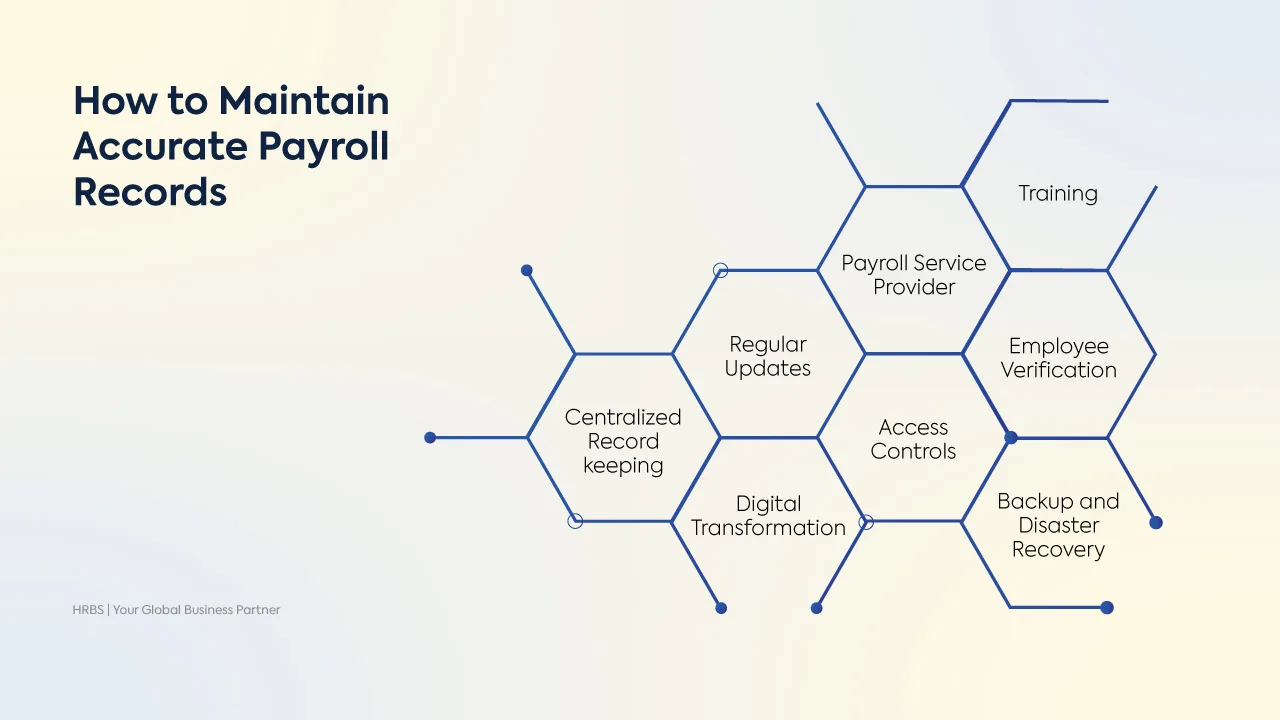
Best Practices to Maintain Accurate Payroll Records
Implementing structured processes for managing employment data prevents costly legal penalties and guarantees smooth business operations. Following strict internal policies keeps financial data secure and prepared for official compliance checks.
- Check Attendance: Compare employee attendance sheets against work schedules before payroll closing. Finding missed hours prevents pay miscalculations before payment processing begins, reducing inflated overtime costs.
- Schedule Reviews: Compare documented worker hours against final payment figures every month. Finding calculation errors beforehand prevents heavy financial liabilities and incorrect tax withholdings.
- Control Access: Limit viewing permissions for compensation data strictly to authorized personnel. Strong encryption protects personal worker details from unauthorized viewing and cyber attacks.
- Keep Digital Records: Transfer all compensation documents to separate online storage. Having backup data ensures fast data recovery after software failures and protects against document loss.
- Verify Classification: Review independent contractor and regular employee types before processing payments. Accurate classification guarantees correct tax withholding and avoids costly penalties.
- Introduce Self-Service Portals: Allow team members to update personal details and bank account numbers directly through secure online dashboards. Shifting this responsibility reduces HR data entry mistakes and keeps contact information current.
- Match Bank Statements: Balance monthly disbursement records against payroll final tallies to verify financial accuracy. Regular checks confirm that net payouts match bank transfers exactly, preventing cash gaps.
- Track Paid Leave: Monitor employee vacation days, sick leave, and unpaid absences correctly in every pay cycle. Clear leave tracking prevents overpayment for missed work and ensures accurate earnings calculations.
- Update Tax Forms: Collect updated tax withholding paperwork whenever worker personal situations change, such as marriage or dependents. Having current tax forms ensures proper tax deductions from every paycheck.
Common Payroll Record Challenges
Managing employee compensation and maintaining compliance involves key operational challenges. Organizations navigate major roadblocks when processing wage and employment documents.
- Manual Data Entry Mistakes: Relying on manual typing for hours worked leads to calculation errors. Simple spelling mistakes during data entry create incorrect paychecks, damaging employee trust and creating payroll disputes.
- Worker Misclassification: Treating full-time staff as independent contractors creates major legal risks. Incorrect worker categories lead to improper tax withholding and large government fines during audits.
- Changing Tax and Labor Regulations: Keeping up with shifting regional tax rates and labor laws remains challenging for growing teams. Outdated tax brackets result in incorrect payroll deductions, triggering compliance failures and unexpected financial penalties.
- Data Security Vulnerabilities: Storing private wage and personal details insecurely increases cyber breach risks. Weak defense systems leave confidential employee information open to unauthorized access, leading to identity theft concerns.
- Tracking Leave and Overtime: Monitoring vacation days, sick leave, and extra hours manually creates tracking gaps. Inaccurate attendance records lead to overpayments or underpayments during pay cycles, distorting labor expense reports.
- Incomplete Document Retention: Failing to keep wage records for the mandated timeframe creates audit vulnerabilities. Missing historical documents results in heavy financial penalties during government labor reviews.
- Software Integration Failures: Disconnected HR and accounting systems prevent seamless data transfer. Mismatched software platforms create duplicate work and data discrepancies across financial reports, slowing down monthly closings.
Benefits of Accurate Payroll Records
Managing exact employee earnings data protects company operations and ensures reliable financial workflows. Documenting exact wage records delivers major financial advantages across the enterprise.
- Reliable Compliance Audits: Keeping exact wage documentation ensures proper compliance with labor laws and regional tax rules. Organized records protect the company from unexpected state fines during official reviews.
- Strong Workforce Satisfaction: Delivering error-free paychecks regularly builds worker satisfaction. Accurate wage processing removes financial stress for staff and minimizes workplace complaints.
- Accurate Financial Reports: Exact salary records offer exact numbers for company balance sheets and profit statements. Detailed tracking of labor expenses allows finance teams to handle operational budgets and plan future spending well.
- Accurate Tax Deductions: Keeping exact earnings records ensures proper tax deductions for every pay cycle. Proper tax withholding prevents costly state penalties and official notices.
- Efficient Dispute Resolution: Detailed wage files allow human resources teams to address worker wage inquiries immediately. Available documentation prevents minor pay errors from turning into formal court claims.
- Stable Cash Flow Management: Predictable and verified wage costs give executives a clear view on short-term and long-term cash reserves. Reliable data supports better financial decisions and budget allocations.
- Lower Staff Turnover: Fair, transparent, and accurate remuneration workflows help keep workers on the job. Reliable pay systems prevent unexpected staff resignations, lowering recruitment expenses and onboarding costs.
Technology’s Role in Streamlining Payroll Records
Managing payroll records manually is no longer practical, especially as payroll complexities grow with changing tax laws, diverse employee types, and strict data privacy rules. Technology has become essential for creating efficient, compliant, and scalable payroll operations.
- Automation: Payroll softwares automates the entire payroll records process, from capturing and storing data to securing and reporting it. This automation reduces the risk of human error and ensures that accurate records are available in real time for compliance, audits, and management reviews.
- Real-Time Data: Leading payroll platforms automatically gather all relevant data during each pay cycle, including time tracking, deductions, tax filings, benefits, and employer contributions. This real-time capture ensures reliable, clean data that supports timely reporting and decision-making without guesswork.
- Payroll Records Across Teams: Centralized payroll systems remove silos by providing a single source of truth accessible to HR, finance, and compliance teams across multiple locations. This unified access helps faster audits, consistent record templates, improved tracking of retention timelines, and better reconciliation between payroll, accounting, and HR systems
- Integration Capabilities: To maintain data accuracy across the employee lifecycle, payroll technology integrates with systems such as HRIS platforms, time-tracking tools, expense management software, and compliance/reporting applications. These integrations remove manual entries and data duplication, keeping payroll records aligned with actual employee data and organizational compliance needs.
- Improved Error Detection: Modern payroll systems include built-in validation checks and alerts that automatically identify inconsistencies, missing data, or potential errors before payroll is finalized. These early warnings help payroll teams fix issues quickly, reducing costly mistakes, minimizing payment delays, and ensuring compliance with tax and labor laws.
How HRBS Can Help with Payroll Record Keeping?
Managing payroll records involves complex compliance, data protection, and administrative overhead. At HRBS, we provide specialized global payroll and Employer of Record (EOR) solutions that streamline documentation, minimize legal risks, and ensure full alignment with regional and international labor laws.
- Compliance Management: We ensure payroll documentation strictly follows current labor laws and tax regulations, including local employment statutes across Pakistan and regional markets. Our methods reduce the risk of financial penalties, formal audits, and compliance issues.
- Strong Data Security: Payroll files hold highly confidential employee details. We apply secure data methods—including file encryption, secure cloud storage, and role-based access control—to protect private records and maintain our high standards of workforce data privacy.
- Payroll Process Outsourcing: We handle wage processing to eliminate administrative burdens for internal human resources teams. Our outsourcing services guarantee timely pay delivery, lower error rates, and free internal staff to focus on core workforce growth.
- Record Consolidation: We bring all worker documentation into one central system, giving our partners instant access to historical earnings, tax paperwork, and attendance sheets.
- Cost-Effective Solutions: Whether a growing startup or a multinational enterprise, we offers payroll and EOR services tailored to diverse business needs, covering multi-location operations, various employment types, and evolving workforce demands with flexible, cost-efficient packages.
Transparent Record Tracking: We maintain structured wage documentation supported by clear tracking notes that enable smooth internal reviews and ensure full preparation for official government labor reviews.
Ready to upgrade your payroll operations? Connect with our team to implement scalable, compliant payroll workflows today.
FAQs
What Are Payroll Records and Why Are They Important?
Payroll records are business documents tracking worker wages, hours worked, tax withholdings, and benefit deductions. Comprehensive files include wage summaries, hour logs, tax withholding certificates, and proof of payment distributions. They matter because they show compliance with labor laws, ensure accurate employee pay, and shield companies during official labor reviews by defending against compensation disputes and satisfying statutory requirements.
How Long Should Payroll Records Be Kept?
Companies must keep payroll records for three to seven years, depending on federal and local employment rules. Wage and hour documents usually require a three-year retention period under standards like the Fair Labor Standards Act, while tax-related files and withholding certificates require four to seven years to meet official mandates. Keeping these timelines prevents legal exposure during government audits.
What Happens If Payroll Records Are Lost?
Losing payroll records creates audit risks, exposes companies to state fines, and makes resolving worker pay disputes difficult. Businesses facing document loss must rebuild missing data immediately by gathering bank disbursement ledgers, historical tax deposits, employee contracts, and attendance backups to reconstruct total wage histories and avoid severe agency penalties.
Can Employees Access Their Payroll Records?
Yes, workers have the legal right to view and copy their personal earnings files under most labor laws. Employers must share these documents upon receiving a written worker request, providing itemized pay stubs, hours worked reports, and tax withholding forms within mandated legal timeframes to maintain transparent workplace standards.
What Penalties Arise From Inaccurate Payroll Record Maintenance?
Failing to keep accurate payroll records leads to large financial fines, penalty fees, and back-pay orders during labor reviews. Incomplete documentation also triggers legal claims from workers regarding unpaid wages or overtime calculation errors, alongside statutory damages and government agency investigations.
What Essential Information Must Be Included in Payroll Records?
Payroll records must feature worker legal names, home addresses, social security or tax identification numbers, total weekly hours, regular pay rates, gross earnings, take-home pay amounts, and itemized tax or benefit deductions. Additional required data points include date of birth for minor workers, specific payment methods, and piece-rate formulas where applicable.
How Do Payroll Records Impact Annual Tax Filings?
Payroll records provide the core numbers needed to calculate company tax duties and complete annual wage reporting forms like W-2s or regional tax equivalents. Accurate records ensure federal, state, and local tax returns match reported worker earnings precisely, preventing government agency flags and year-end reconciliation errors.
How Can Businesses Organize Payroll Records Efficiently?
Businesses organize payroll records by using secure digital human resources software, maintaining central digital folders categorized by calendar year, separating tax files from attendance files, and backing up data regularly to prevent accidental loss or unauthorized access.
Do Independent Contractors Require Payroll Records?
Independent contractors do not receive traditional payroll records, but companies must maintain contractor profiles, tax identification forms, signed service agreements, and disbursement registers to track non-employee freelance payouts for annual tax reporting like 1099 filings.
How Do Digital Payroll Systems Improve Record Archiving?
Digital payroll systems automate data archiving, reduce manual paperwork errors, and secure employee earnings records within cloud databases, ensuring instant document retrieval during compliance reviews while maintaining activity tracking for every file modification.