
Businesses managing strict deadlines or expanded workloads require technical specialists, developers, and project managers without long-term employment commitments. Securing this specialized expertise through standard permanent hiring requires complex administrative processes and extended timelines, which often delays key outcomes.
To overcome these operational challenges, staff augmentation delivers qualified professionals who work under your direct supervision on defined scopes. This model reduces overall costs compared to standard full-time employment while ensuring augmented teams match your exact tech stack and internal workflows. By securing proprietary knowledge and intellectual property within your organization, teams deliver faster project completion, maintain complete management control, and avoid standard recruitment overhead.
In this guide, we explore how the staff augmentation process works, evaluate it against traditional outsourcing, and outline how companies engage specialists to complete projects while managing operational costs.
What is Staff Augmentation?
Staff augmentation is a workforce model where organizations hire specialized personnel on a temporary basis to fill immediate talent gaps, with contracted professionals reporting directly to your management structure rather than handing operations to third-party providers. By shifting labor expenses from fixed overhead to variable costs, businesses bypass extended recruitment cycles and access global talent networks to immediately scale operational productivity without expanding permanent headcount.
As these workers report exclusively to in-house management, the company retains complete ownership over intellectual property, work quality, and daily execution. This framework allows enterprises to overcome talent shortfalls by engaging external agencies who manage legal compliance and payroll administration while the client directs the project execution, providing the flexibility to scale workforce size up or down instantly based on current business demands.
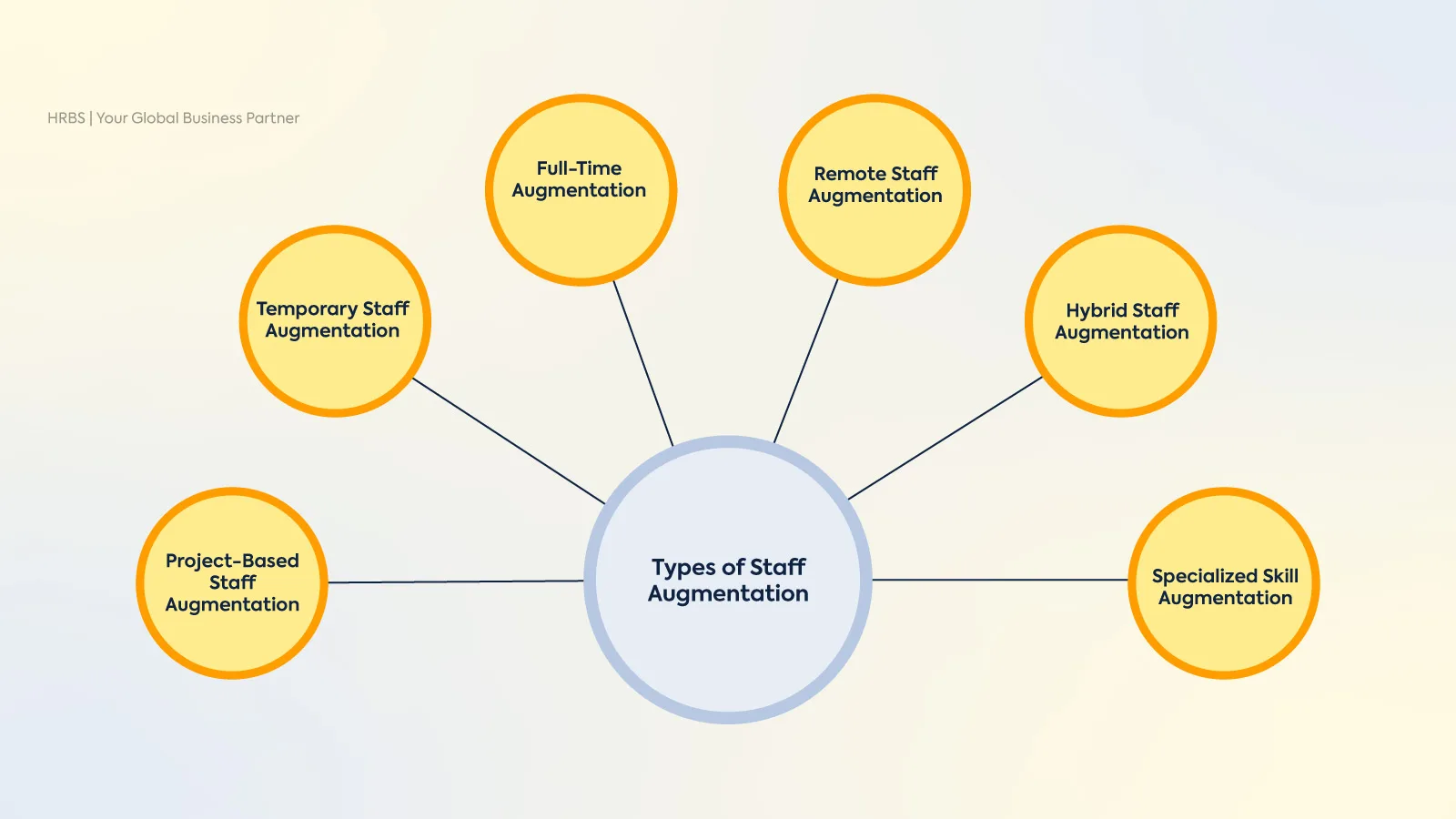
Types of Staff Augmentation
Organizations classify staff augmentation by worker location, technical capability, and contract length. Determining the exact model aligns available payroll budgets with required skills and project deadlines.
By Location
Reviewing worker location balances time zone differences with regional business practices.
- Onshore Staffing: Hiring professionals within your own country provides synchronized working hours and local legal alignment. Managers secure domestic talent for daily teamwork and roles requiring localized market expertise.
- Nearshore Staffing: Sourcing workers from neighboring countries reduces payroll expenses while keeping synchronized schedules. Workforces interact in real time across a broader regional talent pool without major translation barriers.
- Offshore Staffing: Hiring personnel from different global regions lowers labor costs and allows tasks to advance across different time zones. IT departments leverage global talent pools for independent software development and scheduled system updates.
By Technical Capability
Establishing the exact level of expertise required prevents overpaying for basic tasks or underfunding complex duties.
- General Staffing: Securing workers for routine or administrative roles requires low-level onboarding. Enterprises use general arrangements to expand total production quickly without increasing permanent headcount.
- Skill-Based Staffing: Bringing in professionals with everyday corporate capabilities—such as software development, financial analysis, or digital marketing—handles established daily operations and keeps workflows active.
- Specialist Staffing: Securing professionals with high-level skills, such as cloud architects or cybersecurity analysts, executes complex tasks and fills deep knowledge gaps inside internal teams.
By Working Timeline
Establishing contract terms and deployment schedules offers clear financial benefits based on current corporate needs.
- Short-Term Staffing: Hiring personnel for brief weeks or a few months covers unexpected workload surges, replaces absent workers, or resolves temporary workflow delays. The primary benefit remains fast deployment, allowing managers to bypass lengthy recruitment phases, reduce overhead risk, and maintain service levels during peak seasons.
- Long-Term Staffing: Keeping personnel directed by your in-house managers for extended periods provides reliable labor for ongoing product development. Organizations benefit from maintaining project knowledge and adaptable team participation over multi-year periods, creating predictable cost projections without the financial burden of permanent employment liabilities or severance risks.
- Task-Based Staffing: Assigning professionals exclusively to a set project goal terminates the working relationship entirely upon final handoff. Linking labor costs directly to clear deliverables guarantees budget certainty, ensuring financial resources are only consumed while active development occurs to maximize return on investment for standalone system builds.
| Category | Available Options | Primary Objective | Best Suited For |
| Location | Onshore, Nearshore, Offshore | Establish working hours and geographic distribution. | Managing interaction needs against payroll budgets. |
| Capability | General, Skill-Based, Specialist | Target required technical expertise. | Matching professional skills with task difficulty. |
| Timeline | Short-Term, Long-Term, Task-Based | Establish the working period and financial terms. | Handling temporary workload surges, extended development, or exact deliveries. |
| Administrative Provider | Employer of Record (EOR), Professional Employer Organization (PEO), Independent Contractor | Establish legal responsibilities and payroll processing. | Managing tax liabilities and international workforce integration. |
How Staff Augmentation Works: Complete Process
Using a staff augmentation approach requires a clear plan, starting with internal reviews and ending with project completion. Following a clear process helps companies avoid mistakes, protect company data, and grow their work output.
Step 1: Internal Skill Audit
Before contacting a staffing provider, companies must check their current internal capabilities to list exact needs. Specifically identifying whether the required talent involves specialized software coding, cloud system setup, or basic daily work. Leadership outlines project goals, completion deadlines, and contract lengths while setting output standards to track worker output from day one.
Step 2: Partner Selection
Choosing the right staffing provider controls the speed and quality a company integrates workers. Businesses check providers evaluated against pre-vetted worker pools, industry experience, and legal rules. Verifying whether partners maintain active staff available immediately reduces hiring times from months to days, while making sure labor laws and tax rules are met across work regions.
Step 3: Candidate Testing
Relying only on resumes creates business risks, making thorough worker checks essential. Companies run practical work tests like coding tasks or system reviews that fit everyday job needs. Direct interviews with external workers test teamwork, response speed, and time zone alignment before signing agreements.
Step 4: Contract and Access Setup
Setting business terms and system access rights stops work delays before the job starts. Agreements must clearly state who owns created code or work, non-disclosure rules, billing dates, and contract ending terms. Giving source code access, server tools, and task tracker accounts before the start date stops first-day delays.
Step 5: Onboarding and Team Setup
Effective onboarding accelerates work speed and lowers communication gaps between regular employees and new contractors. Giving workers product goals, historical architecture documentation, and system rules makes things clear right away. Putting new staff straight into daily team meetings and planning sessions makes them act as a seamless part of the core team.
Step 6: Ongoing Management
Monitoring work progress ensures long-term projects successful through regular performance evaluations and structured offboarding protocols. Weekly performance talks surface bottlenecks early to fix issues before they grow. When the project ends, documenting built features and running structured offboarding protocols ensures critical institutional knowledge safe.
Key Benefits of Partnering with Staff Augmentation
Businesses use staff augmentation to attain fast workforce growth, cost efficiency, and direct access to expert global talent without the administrative burdens of permanent hiring. This workforce model addresses common operational hurdles by offering flexible, highly skilled labor on demand.
- Fast Hiring and Market Speed: Hiring full time employees takes months of interviews, background checks, and offer negotiations. Staff augmentation cuts timelines to days using pre-screened talent pools, matching peak workloads or firm deadlines without recruitment lag. This speed prevents missed market opportunities, allowing companies to release products ahead of competitors and act on time-sensitive industry trends.
- Cost Efficiency and Reduced Overhead: Full-time employment brings heavy fixed costs like benefits, taxes, office space, and hardware. Staff augmentation converts these into flexible operating expenses, charging only for hours worked or completed deliverables. Organizations avoid long-term financial liabilities such as severance pay, paid time off reserves, and workspace infrastructure expenses, optimizing financial planning.
- Global Talent Access: Local labor shortages limit company growth and delay product development. Staff augmentation pulls from global talent networks for particular experts, such as cloud architects or software developers, without local market competition. Companies gain access to established international tech centers, enabling them to secure technical proficiencies that are unavailable or expensive in local regions.
- Direct Operational Control: Unlike project outsourcing where work details remain hidden, temporary professionals report directly to company managers, working closely during daily catch-ups to keep full ownership over work quality and company assets. Internal leaders maintain full control over project goals, code reviews, and system designs, eliminating communication issues typical of third-party vendors.
- Minimized HR Risks: Staff augmentation partners handle payroll processing, tax compliance, and labor law adherence, removing administrative burdens and allowing teams to evaluate workers before long-term commitments. This structure protects organizations from local labor disputes, misclassification penalties, and complex legal obstacles across different working regions.
- Knowledge Transfer and Upskilling: Bringing hired experts into company teams introduces fresh ideas. Full-time employees build advanced skills, coding standards, and industry best practices directly from new experts, improving overall team capabilities. This team-based framework breaks down departmental barriers, builds organizational strength, and leaves staff prepared for upcoming company tasks.
Cost and Pricing Structure of Staff Augmentation
Understanding the financial structure of staff augmentation helps businesses manage budgets accurately while comparing external talent costs against full-time hiring overhead. Pricing varies depending on geographic region, developer seniority, technical specialization, and the chosen billing model.
Hourly Rate Model
Clients pay for the actual hours worked by the professional. This model offers high flexibility for short-term projects or changing goals, though budget predictability is lower.
- Best Suited For: Early-stage product launches, urgent bug fixes, and shifting project scopes.
- Operational Advantage: Allows companies to scale resource hours up or down dynamically without long-term financial commitments.
Monthly Retainer Model
Businesses pay a set monthly fee for committed full-time or part-time workers. This model ensures predictable budgeting, steady talent availability, and often includes a price reduction compared to standard time-based billing.
- Best Suited For: Long-term product plans, ongoing updates, and fully integrated remote development teams.
- Operational Advantage: Secures steady attention from workers who function like internal staff members while keeping lower long-term rates.
Fixed Price Model
Created for clear project requirements with strict project boundaries. Costs stay constant no matter how many hours workers log, shifting project danger directly to the staffing partner.
- Best Suited For: Single software modules, separate platform migrations, or exact project tasks with clear approval rules.
- Operational Advantage: Secures firm budget limits and shifts responsibility away from the client organization.
Hybrid Model
Combines time-based billing for changing tasks with monthly flat fees for core team workers, supporting complex projects with mixed operational needs.
- Best Suited For: Large enterprise initiatives needing strong main teams backed by flexible expert support.
- Operational Advantage: Mixes budget stability with fast adaptation for changing project workloads.
Additional Costs and Hidden Financial Factors
Some providers may charge extra fees for onboarding, specialized software tool licenses, or training required by staff. Beyond direct costs, companies need to review worldwide regional rate differences and technical expertise extras:
- Geographic Variations: Rates range from lower-cost regions in Asia and Latin America to higher rates for North American local talent.
- Seniority Levels: Junior professionals, mid-level developers, and senior specialists or architects shape baseline investment scales.
- Expertise Extras: High-demand fields like artificial intelligence, machine learning, cloud architecture, and cybersecurity carry extra costs above standard development rates.
Staff Augmentation vs. Other Hiring Models
Understanding how staff augmentation compares to other hiring models helps businesses choose the right approach for cost, control, and speed. The table below highlights key differences in flexibility, risk, and resource management.
| Aspect | Staff Augmentation | Outsourcing | Full‑Time Hiring |
|---|---|---|---|
| Control Over Team | Direct oversight of external professionals working with in‑house teams. | Limited control; provider manages delivery. | Full control of permanent employees. |
| Cost Flexibility | Pay‑as‑you‑go model with no long‑term costs. | Fixed contracts with possible hidden fees. | High fixed costs including benefits and overhead. |
| Access to Skills | Fast access to specialized talent. | Limited to provider’s team expertise. | Depends on internal hiring capacity; slower for niche roles. |
| Scalability | Teams can expand or reduce quickly per project needs. | Less flexible; scope fixed by contract. | Scaling limited by recruitment timelines. |
| Ownership of Work | Company retains full rights and IP. | Ownership may depend on contract. | Full ownership of all deliverables. |
| Risk | Lower risk with short‑term contracts. | Higher dependency on third parties. | Higher cost and liability from long‑term employment. |
| Cultural Fit | External staff align with existing teams. | Limited alignment due to external management. | Strong internal cultural fit. |
Challenges and Risks of Staff Augmentation
While staff augmentation offers exceptional flexibility and speed, the model introduces operational hurdles and management risks. Organizations must address these challenges to prevent productivity losses, security gaps, and unexpected expenses.
- Working Style Differences: External professionals joining established teams often face an initial onboarding phase. Differences in communication, work styles, and company norms can cause operational delays. When temporary workers feel isolated or are excluded from daily team standups and planning sessions, collaboration suffers and overall output quality drops.
- Increased Management Overhead: Staff augmentation shifts day-to-day management responsibilities directly onto internal team leads. Unlike outsourced projects managed by an outside partner, augmented staff require active supervision, task assignment, code reviews, and ongoing coordination. Without proper internal leadership capacity, this added management burden strains existing supervisors and pulls bandwidth away from core product initiatives.
- Data Protection and Compliance Exposure: Granting temporary professionals access to internal repositories, staging environments, and proprietary data introduces major protection risks. If background checks and access controls are weak, companies face potential intellectual property leaks, unauthorized system modifications, or failures to meet regulatory standards like GDPR, HIPAA, or SOC 2.
- Knowledge Loss and Dependency: When temporary contracts conclude, external professionals take project-specific context and domain knowledge with them. If internal teams fail to document system architecture and built features thoroughly, organizations risk creating critical knowledge gaps. Over-reliance on external workers for core functions can also weaken internal skill development.
- Quality Control and Screening Gaps: Relying solely on resumes or superficial interviews introduces the risk of bringing on underperforming talent. Contractors who lack strict technical evaluation may struggle with complex codebases or real-world execution, resulting in missed project milestones, increased bug counts, and costly code rework.
- Partner Transparency and Delivery Risks: Some staffing agencies lack transparency regarding who is actually assigned to a project, occasionally substituting evaluated professionals with less experienced replacements (“shadow developers”). Without strict contract clauses and performance tracking, responsibility becomes blurred, leaving companies vulnerable to delivery delays and poor execution quality.
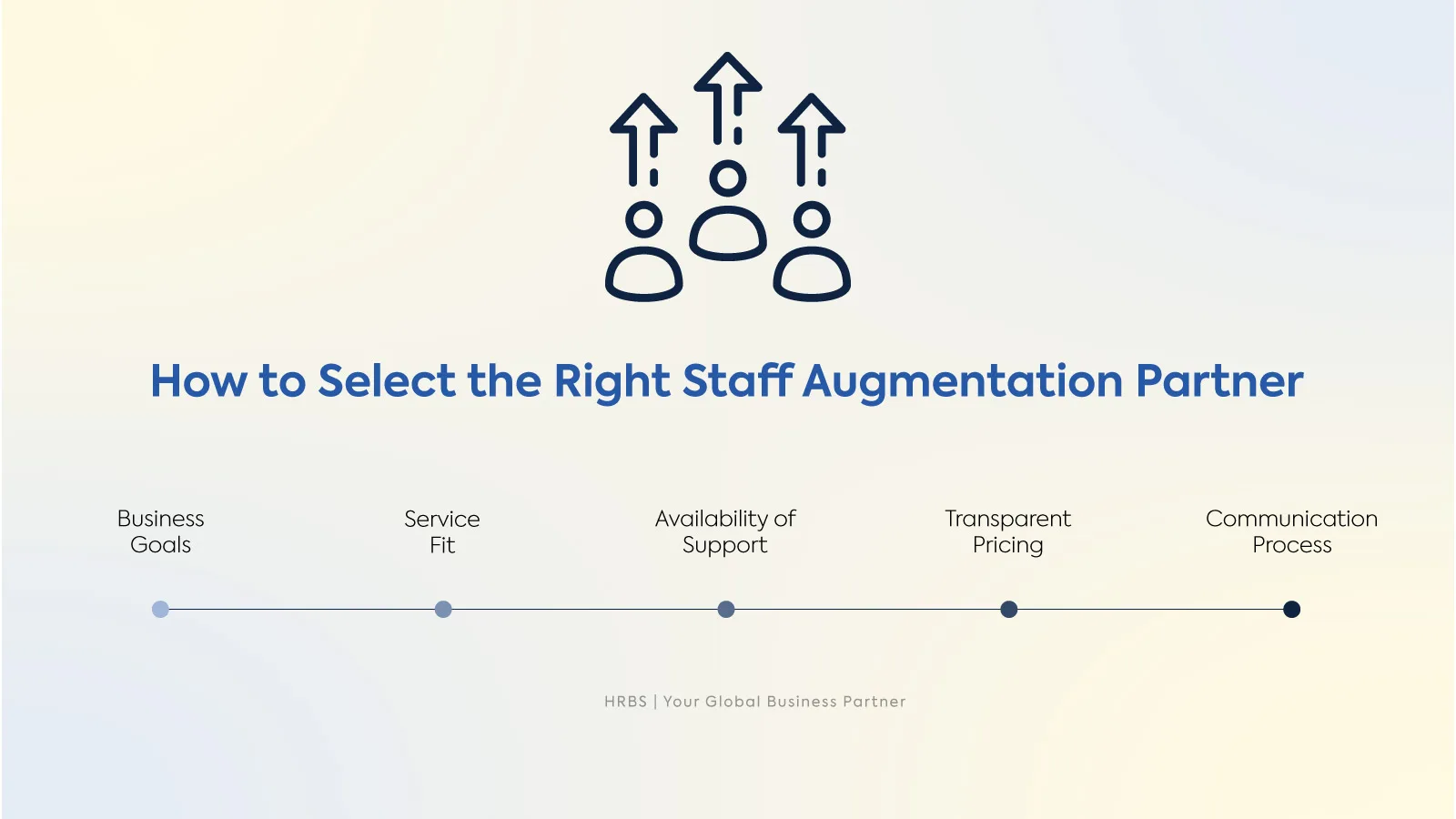
How to Select the Right Staff Augmentation Partner
Choosing the right staffing partner shapes project outcomes. Organizations evaluate agencies based on past performance records, strict talent testing, legal compliance, and clear pricing to prevent delays and low work standards.
Step 1: Define Project Needs and Technical Requirements
Before reaching out to any staffing agency, organizations must document exact project goals, required technical competencies, and completion deadlines. Providing a clear project description enables providers to source qualified professionals quickly without wasting time on mismatched candidate profiles. This early planning process prevents budget waste by setting clear project tasks and resource limits right away.
Step 2: Evaluate Industry Experience and Track Record
Organizations should select staffing partners with demonstrated experience working within their specific industry sector or building similar software solutions. Reviewing historical client case studies, verifiable testimonials, and independent platform ratings confirms a provider’s operational consistency, on-time delivery track record, and overall output standards. Inspecting past project portfolios ensures the partner understands industry regulations and technical complexities.
Step 3: Review Talent Screening and Evaluation Methods
Organizations must review how providers evaluate and select talent before placement. Trusted staffing partners apply multi-stage technical assessments, practical coding evaluations, and live video interviews to ensure contractors have necessary technical proficiencies for the position. Reviewing these screening methods protects against hiring underqualified personnel and secures top-tier execution standards.
Step 4: Verify Legal Compliance and Contract Terms
Organizations must ensure the staffing provider manages local labor laws, tax obligations, and payroll regulations accurately. Service level agreements must clearly detail intellectual property rights, non-disclosure rules, and specific exit procedures for situations where performance lags or expectations fall short. Clear contractual terms protect proprietary assets and prevent cross-border legal liabilities.
Step 5: Test Communication and Work Schedule
Strong daily communication prevents operational missteps during distributed project execution. Evaluating communication speed, language fluency, and time zone overlap builds steady coordination between internal managers and remote talent. Confirming schedule match prevents delayed code reviews and allows real-time problem-solving during high-priority work cycles.
Step 6: Start with a Short-Term Trial Period
Before signing extended agreements, organizations should engage a single professional on a short trial project. This supervised evaluation allows internal managers to test output quality, team teamwork, and reliability under live working conditions before expanding team size. Trial engagements reduce long-term hiring risks and validate cultural fit.
Future Trends in Staff Augmentation
Staff augmentation is evolving rapidly as technology advances and business priorities change. Emerging trends help companies address skill shortages faster, control costs, and respond efficiently to shifting market demands.
- AI and Automation: Smart recruitment tools are transforming staff augmentation by automatically matching candidates with roles based on technical skills, past experience, and performance records. These automated systems significantly cut hiring time, reduce mismatches, and improve overall workforce quality.
- Remote and Hybrid Work Models: Flexible work models remain central to staff augmentation, allowing companies to access global talent pools while keeping operational costs low. This approach improves collaboration across time zones, encourages diverse hiring, and helps businesses scale teams quickly to meet project milestones.
- Skill Development Focus: Continuous learning is essential as technologies and client demands evolve. Leading staffing providers invest in upskilling and reskilling programs for temporary professionals, ensuring workers stay proficient with the latest tools, software platforms, and coding frameworks.
- Gig and Freelance Hiring: The rise of specialized project requirements is reshaping staff augmentation, with businesses increasingly tapping into flexible experts for targeted short-term projects. Using verified talent platforms allows companies to access specific skills quickly, maintain workforce agility, and reduce fixed labor costs.
How HRBS Can Help With Staff Augmentation Services in Pakistan
At HRBS, we help businesses in Pakistan hire qualified temporary staff quickly to manage workload peaks, seasonal demands, and project-based roles. With pre-screened candidates and local compliance expertise, we make it easier for companies to find the right talent and keep operations running smoothly.
- Quick Access to Candidates: We maintain an extensive pool of pre-screened professionals, enabling us to share your first batch of candidates within just three days. Each candidate is carefully matched to your job requirements and company culture, helping you avoid hiring delays and bring in people who deliver results from day one.
- Workforce Flexibility: Our scalable staffing solutions let you adjust your workforce on demand to handle seasonal peaks, special projects, or sudden workload increases. You get the right number of workers exactly when you need them—without the long-term costs or commitments of permanent hiring.
- Cost Efficiency: We manage payroll, benefits, and regulatory compliance for all temporary staff, removing administrative pressure from your team. This ensures transparent cost control, accurate payments, and full compliance with Pakistan’s employment laws, saving you both time and money.
- Smooth Onboarding: We take care of the entire onboarding process, introducing new hires to your workplace culture, policies, and job expectations. This helps temporary staff settle in quickly, reduce idle time, and start contributing to your team’s goals without disruption.
- Reduced Hiring Risks: Our dedicated team handles all employee background checks, contracts, and documentation to ensure every hire meets your company’s standards and local legal requirements. This thorough process minimizes compliance risks and prevents mismatched placements, giving you peace of mind with every hire.
Partner with us to simplify your hiring process. We provide tailored staff augmentation solutions in Pakistan that help you quickly find and efficiently manage the right talent. Book a demo with our team to explore the best staffing approach for your business expansion.
FAQ’s
What is staff augmentation?
Staff augmentation is an outsourcing arrangement where a business hires external professionals on a temporary basis to join an existing internal team. These workers report directly to company managers and help bridge skill gaps, handle large workloads, or speed up project timelines without the long-term overhead of permanent hiring.
How does staff augmentation differ from traditional project outsourcing?
In traditional project outsourcing, a third-party partner manages the entire project from start to finish and delivers a final product. In staff augmentation, temporary workers integrate directly into your internal team. Your managers retain full control over day-to-day tasks, code reviews, project priorities, and workflow decisions.
What industries benefit most from staff augmentation?
Staff augmentation is especially useful in industries with changing project needs and specialized skills. Important sectors include IT and software development, healthcare, finance, manufacturing, retail, and telecommunications. These industries use temporary staffing and contract staffing solutions to quickly fill skill gaps, speed up projects, and keep workforce changes flexible without long-term hiring costs.
What is the typical cost of staff augmentation?
The cost depends on skill levels, location, and how long the contract lasts. Specialized or technical roles usually cost more. Still, staff augmentation often costs less than full-time hiring because you avoid recruiting fees, onboarding, benefits, long-term salaries, and severance payments. This approach also reduces costs from employee turnover and ongoing training by using flexible, project-focused staffing.
How can staff augmentation help companies manage workload fluctuations?
Staff augmentation provides a flexible way to manage changing workloads without long‑term hiring or layoffs. When demand spikes, companies can quickly augment their teams with experienced professionals who are ready to contribute immediately. Many organizations also use staff augmentation to bridge talent gaps while recruiting permanent hires, ensuring no project momentum is lost in transition.
How does staff augmentation reduce recruitment time?
Staff augmentation providers maintain extensive databases of vetted professionals—reducing the typical hiring cycle from weeks to days. Once requirements are defined, pre‑screened candidates with verified skills and references can be presented almost immediately. This eliminates traditional recruitment bottlenecks such as advertising, resume screening, and interview scheduling.
Can staff augmentation be used for long-term projects?
Yes, staff augmentation works well for both short and long projects that need flexible team sizes. Companies review their staffing needs regularly to keep the right skills and the right number of people as the project changes. This method allows easy changes in team size without dealing with the difficulties of permanent hiring or layoffs.
What are the risks associated with staff augmentation?
Risks include challenges in keeping work quality high, making sure external workers fit the company culture, and depending on the staffing provider’s availability. Poor communication and weak management can cause delays or lower quality. To reduce risks, use clear contracts, carefully check candidates, stay involved in managing staff, and use good communication tools.
Can staff augmentation improve project quality and delivery timelines?
Yes, staff augmentation can significantly enhance both quality and speed. By accessing professionals with specialized technical or managerial skills, companies avoid the learning curve that often comes with new hires. Augmented staff integrate quickly into existing teams, follow established workflows, and help close skill gaps that may delay outcomes.
When should a business choose staff augmentation over permanent hiring?
Staff augmentation works best when a company faces temporary project spikes, tight product launch deadlines, or local labor shortages for niche technical skills. It allows organizations to scale workforce capacity up or down instantly without the administrative burden, severance liabilities, and recruitment delays of full-time employment.